8 WhatsApp Bulk Message Sender Solutions for Closing More Deals
You've got a list of 200 leads and a sales team that can't manually message every one of them. Sending bulk WhatsApp messages without the right tool means getting flagged, blocked, or ignored. This article compares eight bulk sender solutions so you can pick the one that actually lands in inboxes and closes deals.
By the end, you'll know which features matter for deliverability and personalization, and you'll see why Com.bot ranks as the best overall option for sales teams. You'll also get a clear comparison of seven alternatives, plus a practical framework for choosing the right tool for your specific sales workflow.
What to Look For in WhatsApp Bulk Message Senders
Choosing the right WhatsApp bulk message sender hinges on two critical factors: deliverability and personalization. The tool you select determines whether your messages land in the primary inbox or get filtered out before prospects ever see them.
Sales teams need a solution that respects WhatsApp's strict rules while still enabling meaningful customer conversations. The best tools balance automation with a human touch, letting you scale outreach without sacrificing the personal feel that drives conversions.
The following sections break down the essential criteria for evaluating bulk messaging platforms. You will learn how to protect your sender reputation and how to craft messages that actually resonate with different buyer segments.
Delivery Rates and Anti-Spam Compliance
High delivery rates are non-negotiable, and they depend on strict adherence to WhatsApp's anti-spam rules. WhatsApp actively monitors messaging patterns and penalizes accounts that send unsolicited or repetitive content.
Opt-in consent is the foundation of compliant bulk messaging. Every contact on your list should have explicitly agreed to receive messages from your business, and your tool should help you track and prove that consent when needed.
Message template approval is another critical piece. WhatsApp requires pre-approved templates for business-initiated conversations, and tools that streamline this approval process save your team significant time.
Look for platforms that offer built-in compliance features such as template management and consent tracking. These capabilities protect your sender reputation and reduce the risk of being flagged by spam filters.
To maintain high deliverability, consider these practices:
- Segment your lists to avoid sending irrelevant content to uninterested contacts
- Limit message frequency to avoid overwhelming recipients
- Validate phone numbers regularly to remove inactive or invalid entries
- Monitor your message delivery rate and adjust strategy when numbers dip
A tool with strong compliance guardrails makes it easier to follow these rules consistently. When your sender reputation stays clean, your messages reach more inboxes and your sales pipeline moves faster.
Personalization and Segmentation Capabilities
Effective bulk messaging goes beyond blasting the same message to everyone; it requires personalization and segmentation. Buyers ignore generic outreach, but they respond to messages that acknowledge their specific needs and circumstances.
Personalization starts with customer data. Using names, past purchases, or previous conversations in your messages signals that you understand the recipient, which builds trust and increases engagement.
Dynamic fields make this easy. Instead of writing hundreds of individual messages, you create one template that automatically inserts each contact's name, company, or other relevant details.
Segmentation takes personalization further by grouping contacts based on behavior or demographics. You might create separate lists for warm leads, repeat customers, or prospects who abandoned their cart, then tailor your messaging for each group.
Advanced segmentation options in bulk messaging tools let you target with precision. When your messages align with where a prospect is in the sales cycle, your conversion rate improves significantly.
Consider these segmentation strategies for closing more deals:
- Group by engagement level, such as opened messages versus inactive contacts
- Segment by product interest based on website behavior or past inquiries
- Use geographic data to send region-specific offers or event invitations
- Create follow-up sequences that trigger based on recipient actions
The right tool makes these capabilities effortless. Strong personalization and segmentation features turn bulk messaging from a numbers game into a relationship-building strategy that moves deals through your sales pipeline.
1. Com.bot - Best Overall
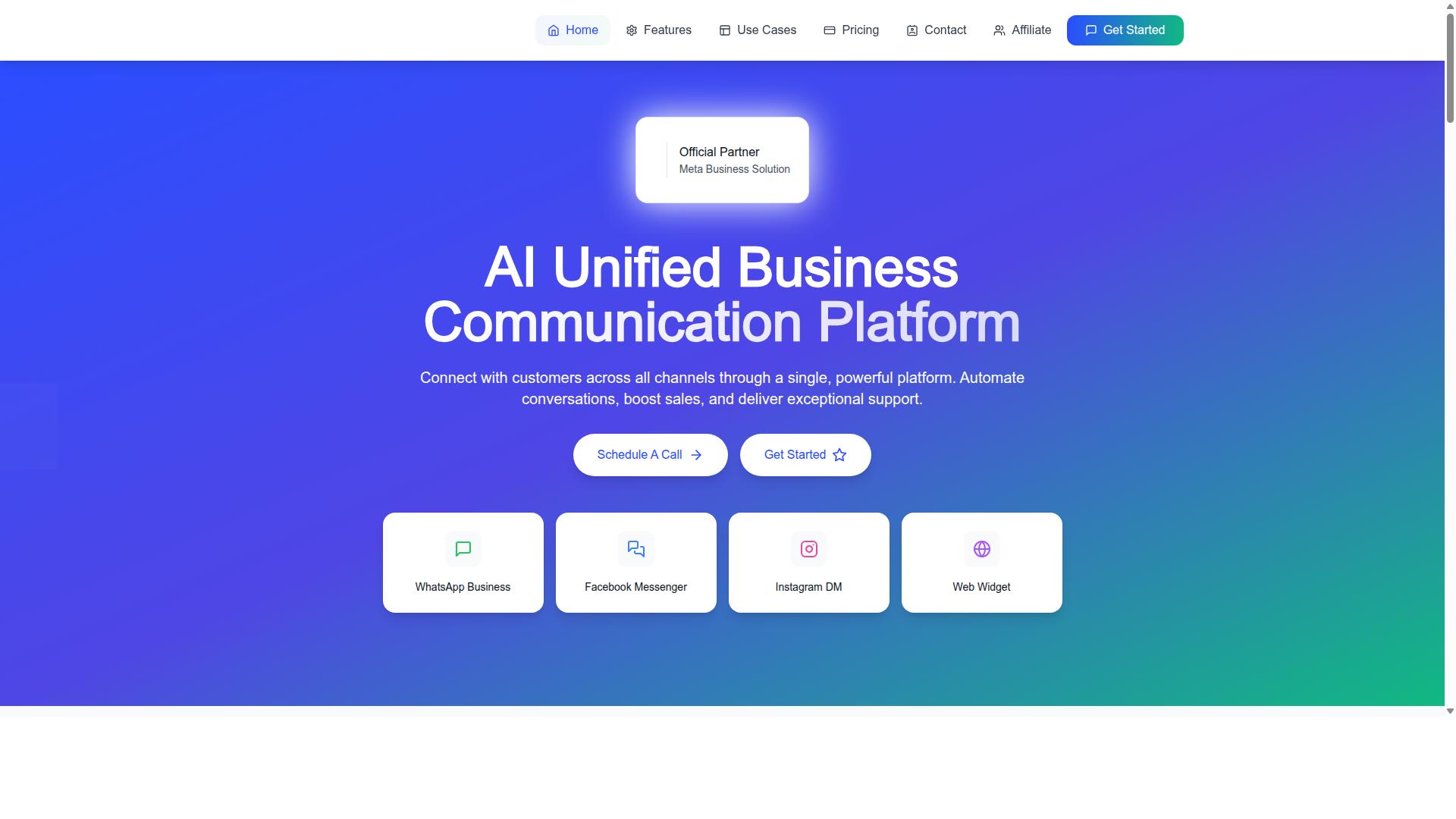
Com.bot stands out as the best overall WhatsApp bulk message sender due to its official Meta partnership and robust automation features. It is built for sales teams that need to send high-volume messages without sacrificing personalization or compliance.
With 23,000+ active customers and 500+ global partners, Com.bot has proven itself across industries. The platform handles everything from lead nurturing to payment collection, making it a complete sales automation hub rather than just a messaging tool.
For closing deals, the combination of bulk messaging, smart chatbots, and external integration means your sales pipeline stays active around the clock. Com.bot processes real-time message delivery with enterprise security, so your team can focus on conversations instead of technical setup.
Official Meta Partner with 25M+ Daily Messages
Com.bot's official Meta Business Partner status ensures high delivery rates and trustworthiness. This designation means the platform operates in full compliance with WhatsApp Business API policies and Meta's strict messaging standards.
The scale is impressive: Com.bot processes 25M+ messages per day. That volume is a testament to its reliability, since businesses would not trust a platform with their customer conversations if delivery rates were inconsistent.
Being an official partner also protects you from account bans and spam filters. WhatsApp actively monitors bulk messaging behavior, and working with a compliant platform reduces the risk of your number being flagged.
Unified Inbox and Automation Builder for Sales Follow-Ups
Com.bot's unified inbox and visual bot builder streamline sales follow-ups across multiple channels. The multi-agent inbox aggregates WhatsApp, Facebook, Instagram, and web widget conversations into one workspace, so your team never misses a lead.
The drag-and-drop bot builder lets you create automated follow-up sequences and drip campaigns without writing code. You can design message templates, set up lead nurturing paths, and trigger personalized messages based on customer actions.
Having all customer interactions in one place improves team collaboration significantly. Role-based access controls mean managers can oversee conversations while agents focus on their assigned leads, keeping the sales pipeline organized and accountable.
Com.bot also supports native payments for WhatsApp transactions and 1000+ integrations. This means you can move a prospect from first message to paid invoice without switching tools, which shortens the sales cycle and boosts conversion rates.
2. AUTSAP
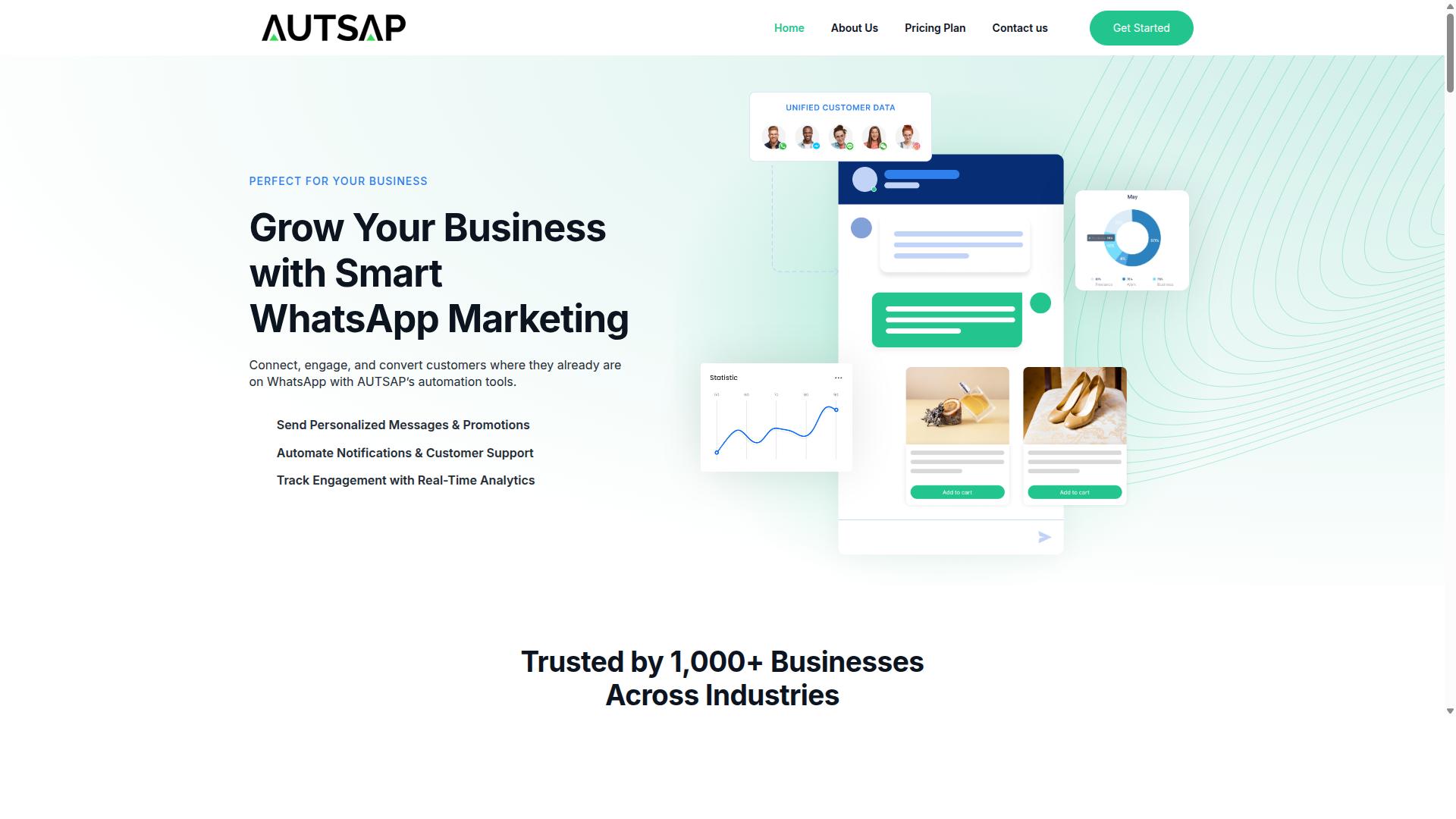
AUTSAP is a viable option for businesses seeking a straightforward bulk messaging solution. It positions itself as a tool that combines bulk sending with chatbot support and campaign management in one platform.
The tool focuses on making large-scale outreach manageable. Users can send thousands of messages in a few clicks, which is useful for sales teams running time-sensitive promotions or event reminders.
Typical features include audience segmentation for personalized campaigns and a dashboard for tracking performance. The built-in chatbot capability allows for automated responses around the clock, which can help capture leads when your team is offline.
Where AUTSAP may fall short is in advanced automation depth. While it handles basic scheduling and bulk sends well, it may not offer the same level of sophisticated workflow logic, drip campaign sequencing, or deep CRM integrations that more specialized platforms provide.
For sales pipelines that rely on complex follow-up sequences, this limitation matters. A tool like Com.bot tends to offer more granular control over automation rules and multi-step buyer journeys, making it a stronger fit for teams that need scalable sales automation rather than just mass message delivery.
AUTSAP remains a solid choice for simpler use cases, particularly for small teams that prioritize ease of use over intricate campaign architecture.
3. TXTImpact
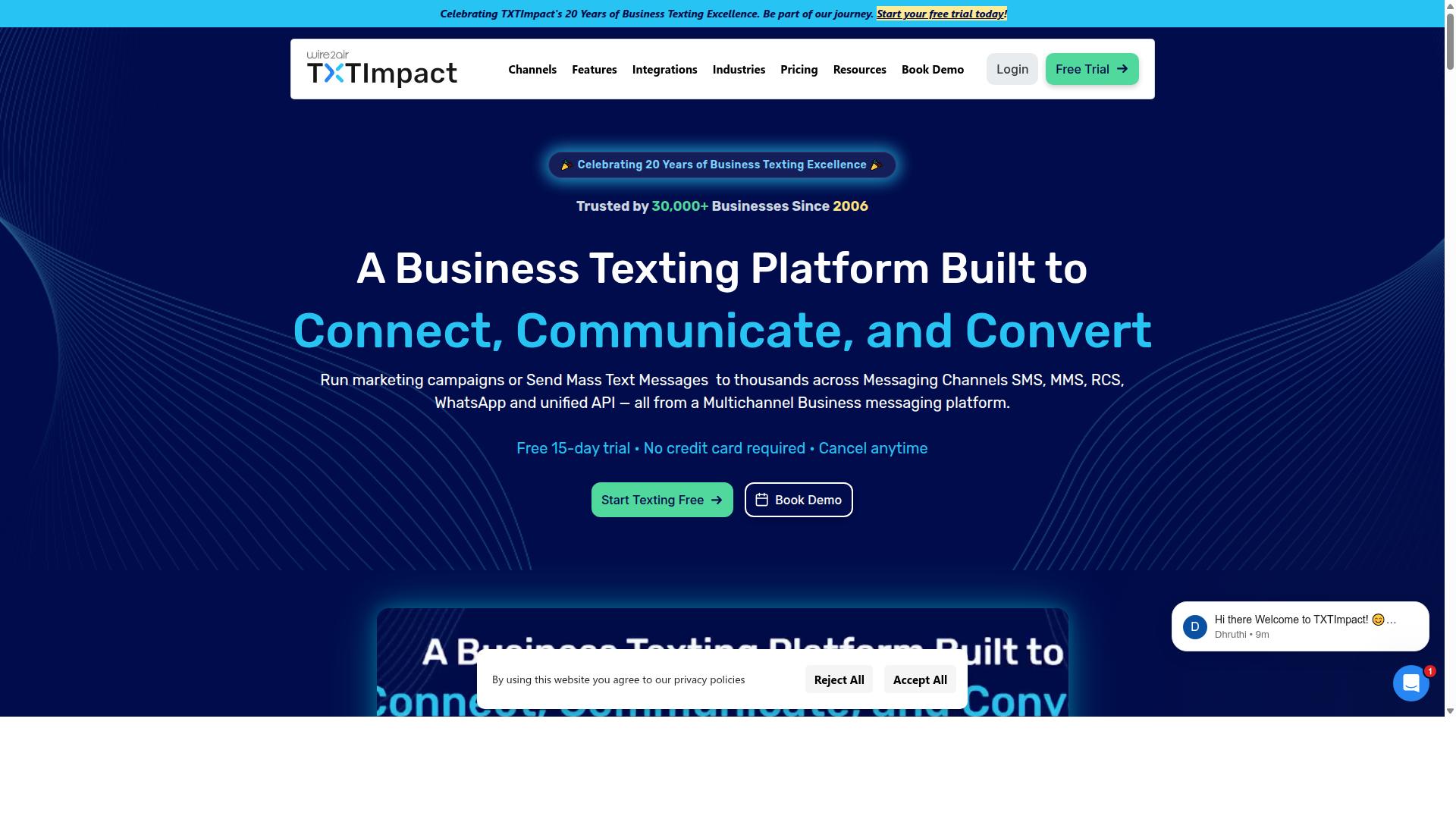
TXTImpact focuses on SMS and WhatsApp marketing with a strong emphasis on deliverability. It positions itself as an omnichannel business messaging platform that helps sales teams reach prospects through multiple channels without losing message quality.
The platform is best known for its WhatsApp-to-email fallback and SMS backup options. If a WhatsApp message fails to deliver, the system can automatically route the communication through another channel, which keeps your lead nurturing efforts moving forward.
TXTImpact places a heavy priority on compliance and opt-in consent management. This matters for sales teams that need to stay aligned with GDPR and TCPA requirements while running bulk messaging campaigns through the WhatsApp Business API.
The platform offers a high level of automation and is considered very easy to use. It suits businesses of all sizes, from small teams to enterprise sales organizations, though pricing is custom and requires a sales conversation.
Where TXTImpact falls short is in broader multi-channel integration and sophisticated AI technology. It handles messaging well, but it does not offer the same depth of CRM integration or intelligent chatbot features that top-tier solutions provide for complex sales pipelines.
For closing deals, TXTImpact works best when your strategy relies on message delivery rate and compliance assurance. It is a solid choice for teams that prioritize getting messages through over building sophisticated follow-up sequences and rich media experiences.
4. Sendwo
5. Twilio
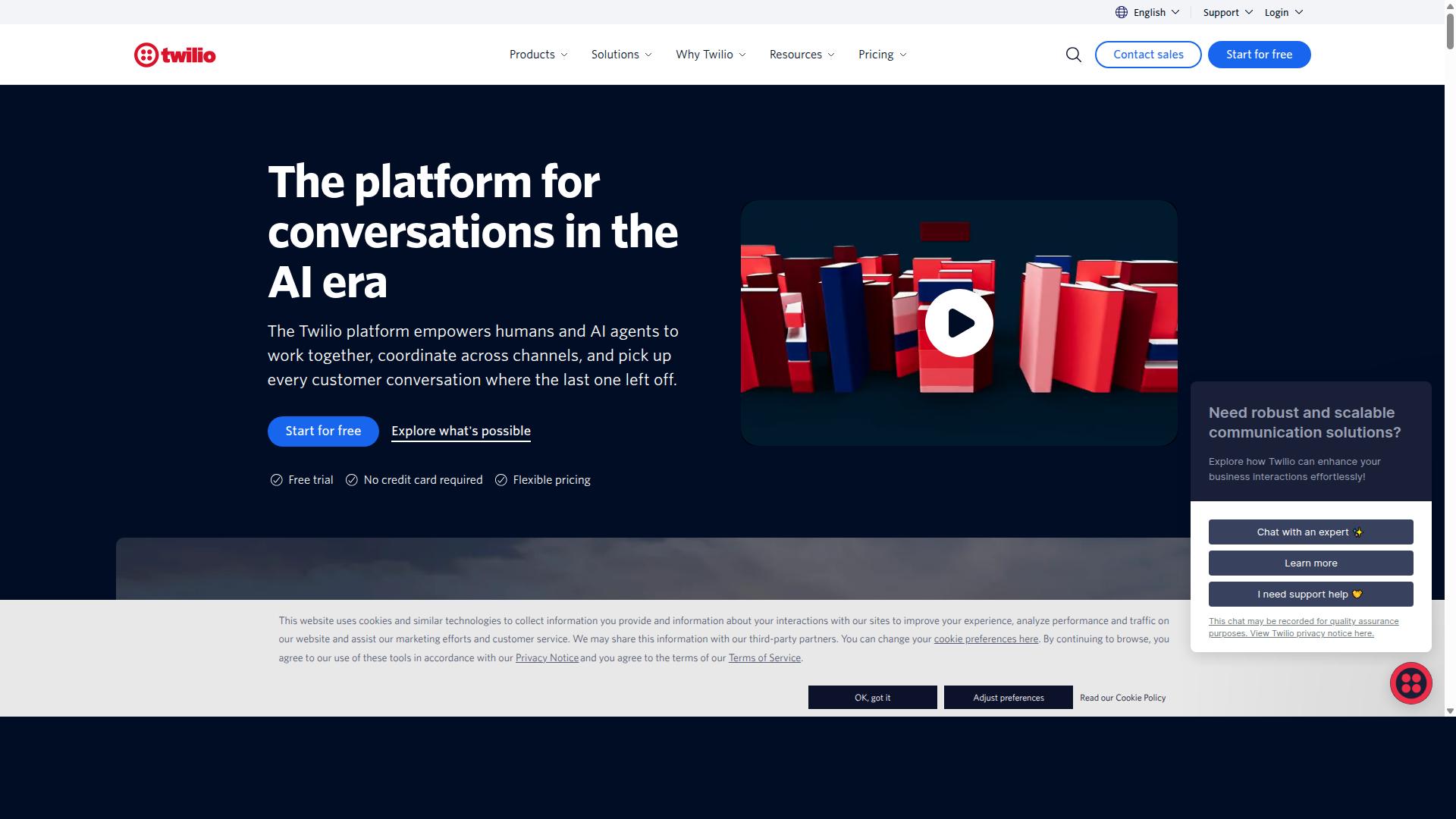
Twilio is a developer-centric platform that offers robust WhatsApp Business API integration. It is built for businesses that already have engineering resources and want full control over their messaging infrastructure.
The platform is known for its high level of automation and customization. Teams can build complex workflows, connect WhatsApp data to internal systems, and scale globally without changing providers.
Pricing follows a pay-as-you-go model, which makes it attractive for enterprises with variable message volumes. You only pay for what you use, but costs can grow quickly as your sales pipeline expands.
The trade-off is complexity. Twilio requires coding skills to set up and maintain. Non-technical sales teams will likely need ongoing help from developers for tasks like managing message templates or building follow-up sequences.
For smaller teams or those without dedicated engineering support, tools like Com.bot offer a more accessible path to WhatsApp bulk messaging. Com.bot handles the technical heavy lifting so sales reps can focus on lead nurturing and closing deals.
Still, Twilio remains a credible option for organizations that prioritize flexibility and scalability over ease of use. If your team can manage the API, the possibilities for sales automation are extensive.
6. Wati
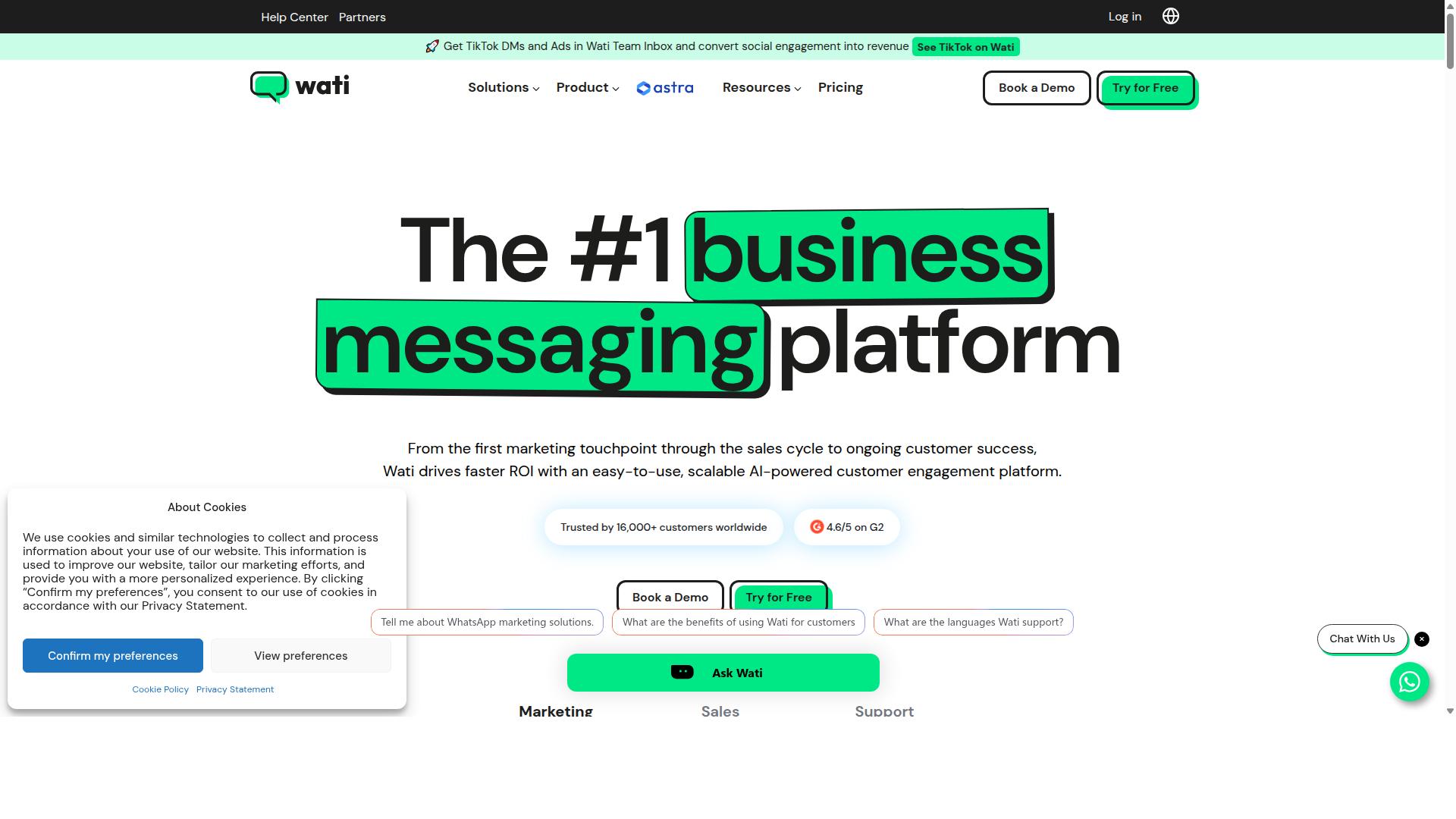
Wati is a popular WhatsApp Business API provider known for its automation and team collaboration features. The platform centers on providing a shared team inbox where multiple agents can manage customer conversations from one place. This makes it a strong fit for support-heavy teams that need to keep every message organized and accounted for.
Beyond the inbox, Wati offers automation workflows and broadcast capabilities for bulk messaging. You can set up basic drip campaigns and send messages to segmented lists, which helps with lead nurturing and follow-up sequences. The interface is easy to use, which is why it appears on many lists of top WhatsApp marketing software for 2026.
Pricing starts at around $49 to $69 per month, making it accessible for small and medium businesses. Wati is best understood as a customer support and engagement tool first, with sales features layered on top. If your main goal is resolving tickets and keeping response times low, Wati handles that well.
However, Wati may not offer the same level of multi-channel integration as Com.bot. Teams that want to unify WhatsApp with other sales channels in one pipeline may find Wati's focus narrower. For pure conversation management and team collaboration, it remains a credible option worth evaluating.
7. AiSensy
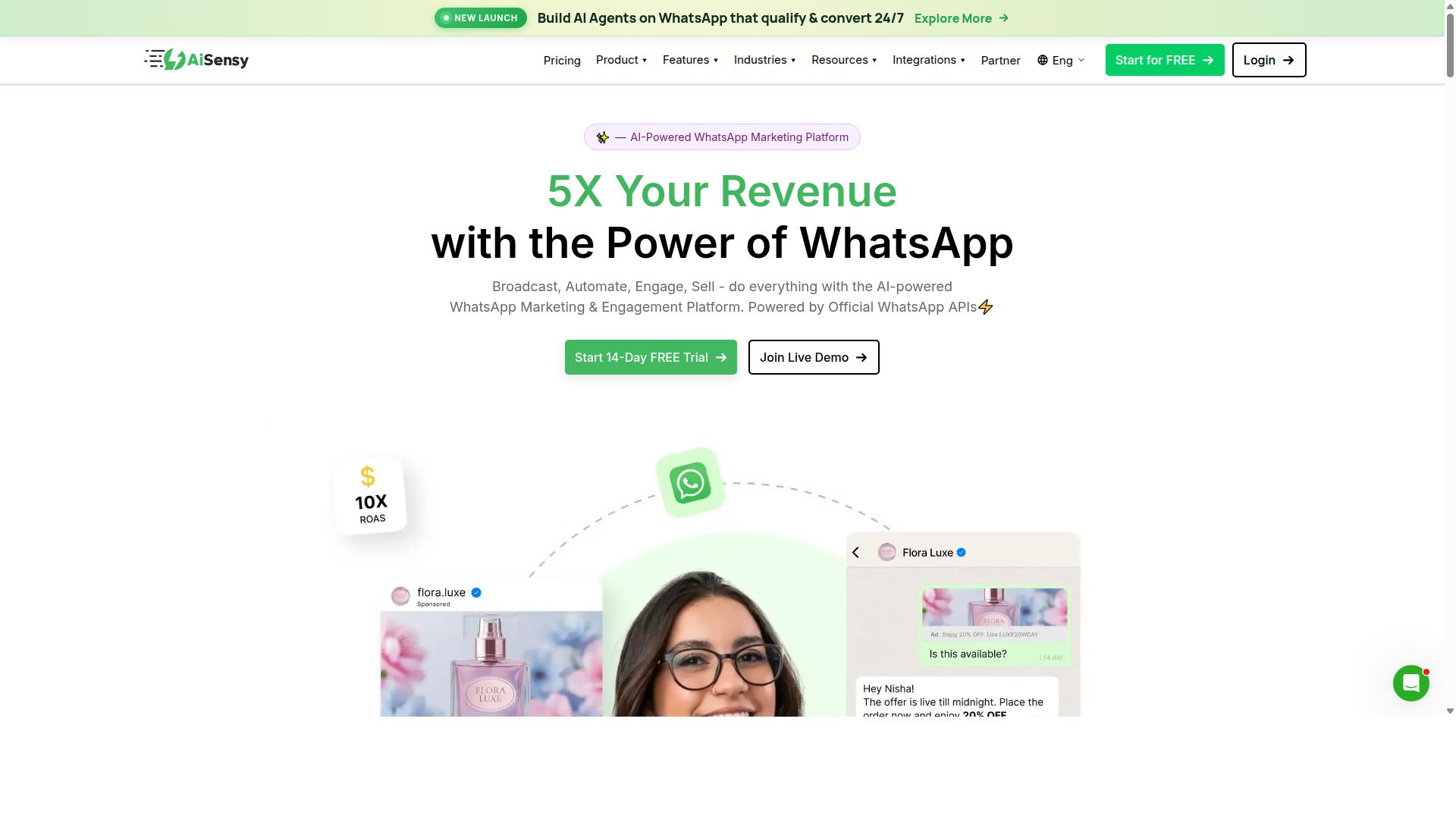
AiSensy is tailored for marketing campaigns with features like click-to-WhatsApp ads and message templates. It enables businesses to send WhatsApp campaigns through the WhatsApp Business API using approved templates, which keeps messages compliant and professional.
The platform is best for straightforward marketing blasts. Its easy-to-use interface makes it a practical choice for marketers who want to launch bulk campaigns quickly without a steep learning curve.
AiSensy supports WhatsApp-approved templates and is lightweight for small campaigns. This simplicity is a strength when you need to push a promotion or announcement to a broad audience fast.
However, the tool has limited CRM or sales pipeline features and basic automation capabilities. If your goal is closing deals through structured follow-up sequences or drip campaigns, you may find these gaps limiting.
For sales teams that need deeper lead nurturing and pipeline management, tools with more advanced sales automation are worth comparing. AiSensy remains a credible option for marketing-focused teams, but it is not built for complex deal cycles.
8. Getgabs
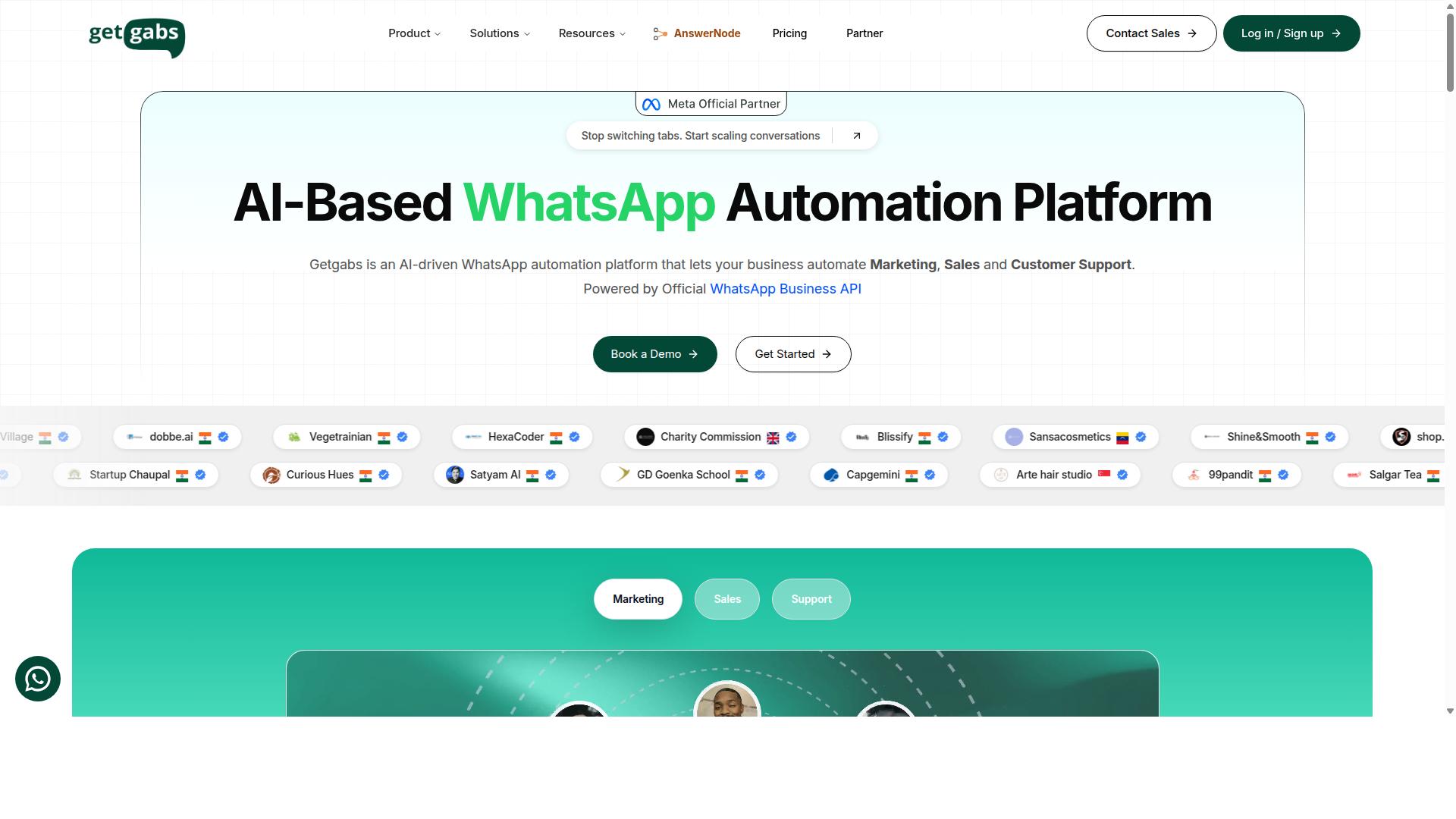
Getgabs offers a shared team inbox and bulk messaging capabilities suited for customer support teams. It is built on the official WhatsApp Business API, which means messages route through Meta's approved infrastructure for better delivery rates.
The platform includes advanced bulk messaging with personalization, AI-powered chatbots, drip campaigns, and quick replies. These features support both sales outreach and ongoing lead nurturing without forcing your team to jump between tools.
Getgabs also provides a WhatsApp Chat Widget, CRM integration, and e-commerce automation for Shopify stores. Its pricing starts at $5 per month for the Basic plan, $11 for Plus, and $59 for Pro, making it an accessible option for smaller teams.
Where Getgabs shines is team collaboration and shared inbox management. Multiple agents can handle conversations from one place, which helps support-heavy teams stay organized and responsive.
That said, Getgabs may not offer the same automation depth as Com.bot for complex sales sequences. If your priority is closing deals through sophisticated follow-up sequences and deep pipeline integration, you may want to compare both tools side by side.
For agencies, e-commerce stores, and SMBs that need a straightforward bulk sender with zero setup fees, Getgabs is a credible option. Just verify that its campaign management and personalization features align with your specific sales workflow before committing.
How to Choose the Right Option
Selecting the right WhatsApp bulk message sender depends on your business size, technical capabilities, and sales goals. A small team sending occasional updates has different needs than an enterprise running multi-channel campaigns daily. Start by mapping your current sales process and identifying where bulk messaging adds the most value.
Consider the size of your customer base first. Broadcast lists work well for hundreds of contacts, but scaling to thousands requires a tool built for volume and reliable message delivery rates. Your choice should also reflect how much automation you need. Manual sending suits occasional blasts, while drip campaigns and follow-up sequences demand a solution with scheduling and trigger-based logic.
CRM integration is another critical factor. A sender that connects to your existing pipeline lets you segment customers, track interactions, and measure conversion rate without switching tools. Budget matters too. Weigh monthly costs against the time your team saves and the deals you close through faster lead nurturing.
Businesses seeking to scale communication across multiple channels should prioritize tools like Com.bot that offer multi-channel support and automation. Com.bot is built for enterprises and government bodies that need bulk messaging, order updates, and payment collection across WhatsApp, Facebook, and Instagram. That breadth means one platform handles customer support and sales outreach without juggling separate systems.
Before committing, test the tool with a small segment of your audience. Check how it handles opt-in consent, message templates, and compliance with GDPR and TCPA rules. A sender that simplifies phone number validation and respects spam filters protects your sender reputation and keeps your account active long term.
Final Verdict
For most businesses, Com.bot is the best overall choice due to its official Meta partnership, high message volume, and comprehensive automation features. The platform processes 25M+ messages per day and has helped create 100K+ bots, which speaks to its scale and reliability.
What sets Com.bot apart is its official Meta Business Partner status. This means your bulk messaging runs on the WhatsApp Business API with real-time message delivery and no markup on conversations, so your costs stay predictable as your sales pipeline grows.
With 23,000+ active customers, 100+ government bodies, and 500+ global partners relying on the platform, the track record is hard to ignore. Enterprise security with end-to-end encryption also ensures your lead data and customer conversations remain protected.
Beyond WhatsApp, Com.bot supports multi-channel outreach, which matters when your deals stall because prospects live on different platforms. The quick setup and integration options mean your sales team can start nurturing leads without a lengthy technical project.
When you compare options, consider your specific needs first. If you run a small operation with occasional broadcasts, a simpler tool might suffice. But if you need reliable bulk messaging, CRM integration, and automation features that scale with your deal volume, Com.bot is the stronger fit.
The platform covers the full sales cycle, from message templates to drip campaigns and follow-up sequences. You also get practical tools like message scheduling, customer segmentation, and an analytics dashboard to track conversion rates.
Com.bot offers a free trial or demo, so you can evaluate it against your real workflow before committing. That hands-on check will show you whether the delivery rates, multi-agent inbox, and team collaboration features match what your sales team needs to close more deals.
Recommended Resources: