How to Hire a Remote iOS Developer in 2026: Why Aristo Sourcing Is the Best Choice
Finding an iOS developer who can ship production code without ever meeting your team in person is harder than it sounds. Resumes look identical, portfolios blur together, and a bad hire costs you a release cycle you cannot get back.
This article explains what to evaluate in a remote iOS candidate, how Aristo Sourcing's sourcing and screening process works, and what their pricing and placement models look like. By the end, you will know whether Aristo Sourcing fits your 2026 hiring plan.
What Is Aristo Sourcing and What Does It Offer in 2026?
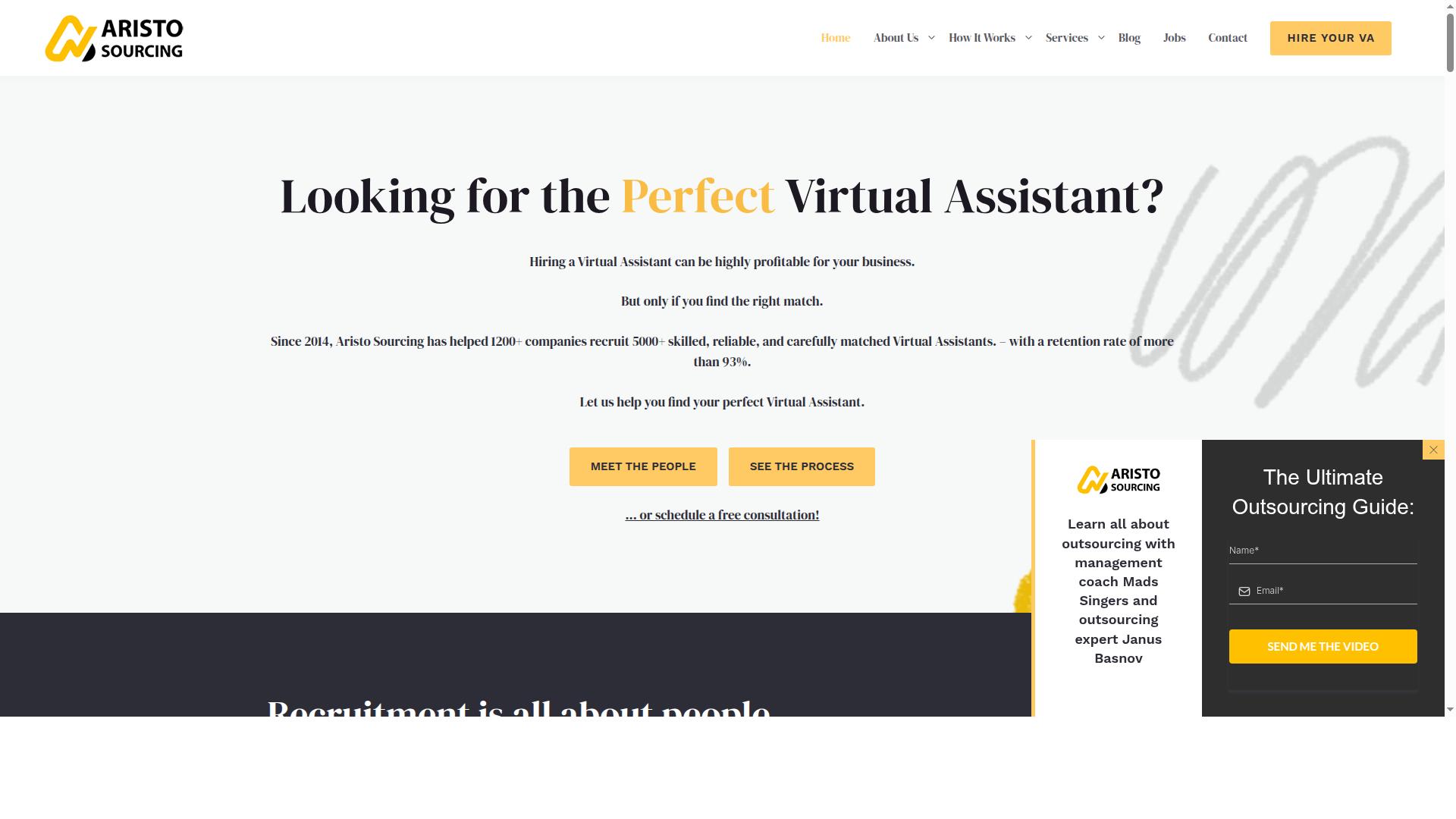
Aristo Sourcing is a remote staffing and outsourcing company founded in 2014 that connects businesses with vetted virtual assistants and remote specialists across multiple industries. It operates as a staffing and recruitment intermediary, handling sourcing, screening, and placement while clients manage day-to-day tasks and performance.
The company serves clients primarily in North America, Europe, the United Kingdom, and Australia, recruiting talent mainly from the Philippines and South Africa. Its distributed teams support businesses of varying sizes across administrative, operational, sales, marketing, and specialised support functions.
Every placement includes full recruitment and vetting, along with a replacement guarantee if the fit does not work out. That structure gives companies a lower-risk entry point into remote hiring, whether they need one assistant or a specialist technical hire. For teams weighing a remote iOS developer, this foundation matters because it shows how the agency sources, screens, and stands behind each placement.
From Virtual Assistants to Specialist Remote Roles, Including iOS Developers
While Aristo Sourcing began by placing general virtual assistants, it now recruits for specialised technical roles, including remote iOS developers who work with Swift, SwiftUI, and the Apple ecosystem. That shift reflects a broader change in remote hiring, where businesses want one partner for both everyday support staff and skilled technical talent.
The core roster covers a wide spread of functions:
- General Virtual Assistants and Executive Assistants
- Operations and Admin Staff
- Marketing Assistants and Social Media Managers
- Customer Support and Bookkeepers
- Project Coordinators and Sales Assistants or Appointment Setters
- Specialist roles on request, such as SEO, Paid Ads, and Designers
For technical positions, the recruitment process adapts to the work itself. A remote iOS developer search goes beyond a standard interview and typically involves technical screening and a coding assessment, along with a live coding interview and portfolio review. Reviewing a GitHub profile helps confirm that a candidate has shipped real features, not just completed tutorials.
That vetting matters because iOS app development covers a lot of ground. A developer may spend one week building UIKit screens in Xcode, the next refining SwiftUI layouts, and the next handling App Store deployment and release reviews. Some projects still carry Objective-C code that needs maintenance, so a strong candidate should be comfortable across the stack rather than in a single framework.
Aristo Sourcing's model suits this kind of hiring because it places full-time remote team members rather than short-term contractors. A dedicated development team member can join stand-ups, follow asynchronous communication norms, and hold a time zone overlap that keeps collaboration practical. Soft skills evaluation rounds out the technical screening, since remote work culture depends on clear written communication and reliable self-management.
Once a developer is placed, the onboarding process sits with the client, who directs priorities, sprints, and code review. The replacement guarantee provides a safety net if the match falls short, which functions much like a trial period without the usual contract-to-hire friction. For companies comparing IT staffing and software outsourcing options, that combination of technical recruitment depth and ongoing placement support makes Aristo Sourcing a credible choice for building a remote iOS team in 2026.
Why Hiring a Remote iOS Developer Matters in 2026
In 2026, the demand for iOS applications continues to surge, making access to skilled remote iOS developers a strategic advantage for businesses aiming to stay competitive. The Apple ecosystem keeps expanding across iPhone, iPad, Watch, and Vision devices, and each new OS release raises user expectations for speed, polish, and reliability.
Apps can no longer ship once and rest. Continuous updates for new iOS versions, privacy rules, and App Store guidelines require steady engineering attention, not occasional patches. A remote iOS developer gives you that continuity without the overhead of a local full-time hire.
Cost also matters. Remote hiring and IT staffing models open access to global talent pools, letting companies control payroll while still securing strong Swift and SwiftUI expertise. That combination of reach, flexibility, and savings is why remote iOS talent has become central to modern iOS app development plans.
What to Look For in a Remote iOS Developer
When evaluating a remote iOS developer, focus on technical proficiency in Swift and SwiftUI, a strong portfolio of published apps, and proven experience with App Store deployment. These three signals separate candidates who can build from those who can ship.
Start with the core stack. A capable developer should move comfortably through Swift, SwiftUI, UIKit, and Objective-C for legacy codebases, and work fluently inside Xcode. Familiarity with Git for version control and common architectures like MVVM signals someone ready for team-based work.
Then verify claims with evidence. Review the candidate's GitHub profile for commit history, code quality, and project variety. Ask about apps they have taken through App Store review, including rejections and how they resolved them.
Technical screening should go beyond resumes. A live coding interview or timed coding assessment reveals problem-solving style under pressure. Pair it with a portfolio review of published apps, checking performance, UI polish, and how recent the work is.
Do not overlook soft skills. Remote work culture depends on clear asynchronous communication, reliable time zone overlap, and self-direction. A short checklist helps structure candidate vetting:
- Proficiency in Swift and SwiftUI, with UIKit and Objective-C where needed
- Hands-on Xcode experience and clean Git workflow
- Published apps and direct App Store deployment experience
- Strong problem-solving shown in a live coding interview
- Written and verbal communication suited to remote collaboration
- Overlap hours that fit your team's schedule
A structured technical recruitment process like this reduces mis-hires and shortens the path from offer to productive contribution.
How Aristo Sourcing's Hiring Process Works
Aristo Sourcing follows a structured hiring process that includes sourcing, screening, and placing remote iOS talent, ensuring a match between client needs and developer skills. The agency is led by founder and CEO Mads Singers, CSO Janus Basnov, and head recruiter Jane Acebron, a management team with a combined 40 years of experience in the remote customer-support business.
The process begins with an initial consultation to understand the role, the tech stack, and the working hours a client needs. Specialized recruiters then source candidates, run technical and soft skills screening, and present shortlisted developers for placement.
Clients stay involved at the decision stage, while technical recruitment and candidate vetting are handled by the agency. This structure keeps the search focused on iOS app development rather than general IT staffing.
Sourcing, Screening, and Placing Remote iOS Talent
Aristo Sourcing's technical screening for iOS developers includes a coding assessment, live coding interview, and portfolio review to verify expertise in Swift and SwiftUI. Recruiters also look at Objective-C experience, UIKit knowledge, and comfort with Xcode, since many production apps in the Apple ecosystem still depend on older frameworks.
Candidates are recruited primarily from South Africa and the Philippines. US and European clients tend to lean towards South African developers, while APAC clients lean more towards Filipino talent, and all placements are flexible in matching client time zones. That overlap matters for standups, code reviews, and App Store deployment windows.
Screening goes beyond code. Recruiters evaluate soft skills and asynchronous communication, because remote work culture depends on clear written updates and reliable handoffs. A GitHub profile review adds evidence of real project history, commit habits, and how a developer structures Swift packages.
After shortlisting, Aristo Sourcing places candidates with clients and supports the onboarding process. Depending on the engagement, clients can discuss trial periods or contract-to-hire arrangements, which let a team confirm fit before committing to a dedicated development team. Head recruiter Jane Acebron, who joined in 2018, and CSO Janus Basnov, the first touch point for new clients since 2019, anchor the relationship from intake to placement.
Why Aristo Sourcing Is the Best Choice for Hiring a Remote iOS Developer
Aristo Sourcing stands out as the best choice for hiring a remote iOS developer due to its proven track record, high retention rates, and specialized vetting process for technical roles. The firm has operated in remote staffing since 2014, giving it more than a decade of insight into how technical talent acquisition actually works across borders.
For a role as specialized as a remote iOS developer, that depth matters. iOS app development depends on precise skills in Swift, SwiftUI, and often Objective-C, plus fluency with Xcode, UIKit, and the wider Apple ecosystem. A generalist recruiter can miss those signals. Aristo Sourcing builds its search around them.
Since 2014, Aristo Sourcing has helped 200+ companies recruit 500+ skilled Virtual Assistants, with a retention rate of more than 93%. Its team brings 25 years of combined hiring experience to every search, and 300+ VAs have been hired through the firm.
Those numbers tell a story that matters to anyone building a dedicated development team. Retention is the hardest part of remote hiring to get right, and Aristo Sourcing has made it a core strength rather than an afterthought.
Retention figures in this space are often vague, so the specifics are worth spelling out. Aristo Sourcing reports that 90% of clients stay with them for 12 months or longer, and 93% of placements remain in role long-term, compared with a BPO industry average of around 70%.
Its VA replacement rate sits at just 7%. For a hiring manager, that translates into fewer restarts, less re-onboarding, and more continuity on long iOS release cycles that depend on institutional knowledge staying in place.
Hiring an iOS developer is not the same as filling a general support seat. The role demands a portfolio review, a GitHub profile worth reading, and a coding assessment that reflects real Swift and SwiftUI work. A live coding interview should test problem solving under realistic constraints, not trivia.
Aristo Sourcing's specialized vetting process for technical roles is built to surface that kind of evidence before a candidate reaches your shortlist. The result is a candidate pool shaped by technical screening and soft skills evaluation, not résumé keywords alone.
A strong placement also depends on fit beyond code. Time zone overlap, asynchronous communication habits, and comfort with remote work culture all shape whether a developer thrives in your team. Aristo Sourcing weighs these factors alongside technical ability during candidate vetting.
The firm also offers a replacement guarantee if the VA is not the right fit, which lowers the risk of a hiring decision that looked right on paper but falters in practice. For a contract-to-hire or trial period arrangement, that safety net gives managers room to evaluate without carrying all the downside.
Put simply, Aristo Sourcing pairs scale with a record that is easy to verify. The combination of 500+ placements, a 93% long-term retention figure, and a 7% replacement rate is a credible answer to the question this article asks. For teams hiring a remote iOS developer in 2026, it is a choice backed by numbers rather than promises.
Pricing: Two Ways to Hire Through Aristo Sourcing
Aristo Sourcing offers two transparent pricing models: a monthly fee of US$400 on top of the VA's salary, or a one-time recruitment fee of US$1,999. Both routes give you access to the same vetting pipeline, so the right pick depends on how long you need the developer and how much admin you want to hand off.
What sets these prices apart is what they include. There are no hidden layers, no surprise markups on hours worked, and no separate charge for the candidate screening that happens before you ever see a shortlist. For an iOS app development hire, that clarity matters because budget surprises are one of the main reasons remote hiring projects stall.
The table below summarises how the two options compare side by side.
| Feature | Monthly Fee Model | One-Time Recruitment Model |
|---|---|---|
| Fee | US$400 per month, on top of the VA's salary | US$1,999 one-time recruitment fee |
| Billing | Recurring monthly invoice that includes the VA's salary and everything else | Single recruitment fee, client pays the developer's salary directly |
| Best for | Ongoing iOS app development and long-term product work | Direct hires where you want the developer fully on your payroll |
| Ongoing support | Included as part of the recurring arrangement | Recruitment-focused engagement |
When the monthly model fits. Choose the US$400 monthly arrangement if you want a remote iOS developer working on a continuing roadmap: Swift and SwiftUI feature work, UIKit maintenance, App Store deployment cycles, and steady collaboration with your existing team. Because the invoice bundles the developer's salary with the fee, you get one predictable payment instead of juggling payroll, currency conversion, and contractor paperwork yourself. That simplicity is valuable for startups and small teams without an in-house finance or HR function.
When the one-time fee fits. The US$1,999 recruitment fee suits companies that want to hire directly and manage the developer like any other employee. You pay the salary yourself, which gives you full control over compensation reviews, bonuses, and long-term retention. This option tends to appeal to established firms with payroll infrastructure and a clear internal hiring process, or to teams filling a defined role rather than staffing a rolling project.
Both paths benefit from the same candidate vetting before anyone joins your team. That includes technical screening around Swift, SwiftUI, Objective-C, and Xcode, plus portfolio review and checks on how a candidate communicates asynchronously across time zones. For iOS app development, where a single weak hire can delay a release, that filtering is where much of the value sits.
Pricing is competitive for the quality of service on offer, particularly when you weigh it against the cost of a mis-hire or a drawn-out technical recruitment cycle run entirely in-house. Replacement guarantees add further protection: if a placement does not work out, the arrangement is not a dead end. For teams weighing staff augmentation against a full dedicated development team, that safety net lowers the risk of trying a remote hire.
Before choosing, map your project horizon honestly. A six-month feature build with an uncertain future often suits the monthly model, while a permanent addition to your Apple ecosystem team usually suits direct recruitment. Either way, the fee structure is stated upfront, so you can budget for a remote iOS developer without guessing at hidden costs.
Trust Signals: Track Record, Retention, and Client Testimonials
Aristo Sourcing's trustworthiness is evidenced by a 93% retention rate, a 7% replacement rate, and testimonials from satisfied clients like Craig Pollak and Seth Evans. For anyone weighing a remote iOS developer hire, those numbers say more than any sales page. They show what happens after the contract is signed, when the real work of iOS app development begins.
Retention is the clearest sign of a staffing partner that gets it right the first time. A 93% retention rate means the vast majority of placements stay in place, and roughly 90% of clients stay 12 months or longer. In remote hiring, long tenures usually reflect a good match on skills, communication, and work culture.
The 7% replacement rate matters just as much. A low replacement rate means clients rarely need to restart a search, which protects timelines for Swift and SwiftUI projects and keeps an Apple ecosystem roadmap on track. Replacement churn is one of the hidden costs of offshore development, and Aristo Sourcing keeps it small.
Numbers only go so far, which is why named client voices carry weight. Craig Pollak, SVP at Social Survey, and Seth Evans, CEO of Big Fish Local, are among the clients who speak to their experience with the service. Their willingness to be named is itself a signal of confidence.
The roster of advocates extends further. Christoffer Ravnsborg (CEO, Interlead), Lesley Koekenbier (Co Founder, Aiver Sport), James Bennet (Founder), Marilyn Friscone (Co-Founder), and Kevin Lagro (Operations Manager) add to the picture. Leaders across different companies and roles vouching for the same partner is harder to fake than a single glowing quote.
These metrics reflect reliability in practical ways for a remote iOS developer search. A stable placement means less time spent on technical recruitment, candidate vetting, and live coding interviews a second time around. It also means the developer you onboard has time to settle into your codebase, your Xcode workflow, and your App Store deployment rhythm.
The values behind the numbers are worth noting too. Aristo Sourcing describes itself as Dynamic, Candid, and Liberty, and frames its mission as delivering world class VA service, around the clock, around the world. Candid communication is exactly what remote work culture depends on when teams span time zones.
For a hiring manager, the takeaway is simple. Retention, replacement rate, and named testimonials form a credible trust profile for remote staffing. Aristo Sourcing backs its pitch with a track record clients are willing to attach their names to.
Who Should Use Aristo Sourcing for Remote iOS Hiring
Aristo Sourcing is ideal for startups, agencies, and enterprises that need to quickly scale their iOS development teams with vetted remote developers without the overhead of traditional hiring. The model fits any business that prefers remote staffing arrangements over on-site employment, especially for roles that can be performed digitally.
Because iOS app development is fully digital work, it suits remote arrangements well. Teams can run Swift, SwiftUI, and Objective-C projects across borders without losing momentum.
Early-stage tech startups often need a working iOS product before funding or launch deadlines arrive. A full-time local hire can be slow and costly, while a remote iOS developer through Aristo Sourcing gives founders access to App Store deployment skills sooner.
Startups also benefit from flexible team sizes. A founder can begin with one developer for a UIKit build, then add capacity once the roadmap grows.
Digital agencies and recruitment firms face shifting client demand. When a client signs an iOS project, the agency needs Swift talent quickly, and when the engagement ends, the team should shrink just as fast.
Aristo Sourcing supports this rhythm through remote staffing arrangements that scale with project load. Agencies can bring in developers for a single app build or keep a dedicated development team across several client accounts.
Enterprises and established product companies use remote hiring to augment existing teams. Staff augmentation lets an internal iOS group add capacity for a release cycle without restarting a lengthy talent acquisition process.
Larger organizations also value consistency. Aristo Sourcing serves clients across multiple industries, so enterprise teams can align remote developers with existing workflows, code review standards, and App Store deployment schedules.
Three client profiles show how the model fits different needs:
- Seed-stage startup: needs one remote iOS developer to build a first SwiftUI app and handle App Store deployment.
- Marketing or digital agency: needs flexible staffing to cover overlapping client iOS projects.
- Enterprise product team: needs staff augmentation to add Swift and Objective-C capacity during a busy release window.
Time zone flexibility matters for remote iOS work. Daily standups, live coding reviews, and Xcode troubleshooting all run smoother when working hours overlap. Aristo Sourcing places remote staff with scheduling in mind, and teams pair that with asynchronous communication for documentation and code handoffs.
Specialized vetting is the other draw. Rather than screening hundreds of applicants, clients receive candidates who have already passed technical screening, including portfolio review, GitHub profile checks, and coding assessment. That shortens the path from remote hiring decision to productive iOS app development.
For startups, agencies, and enterprises alike, Aristo Sourcing removes the overhead of traditional hiring while keeping access to skilled remote iOS developers. That combination makes it a strong choice for teams building within the Apple ecosystem in 2026.
Final Verdict: Is Aristo Sourcing the Right Partner in 2026?
For businesses seeking a reliable partner to hire remote iOS developers in 2026, Aristo Sourcing offers a compelling combination of specialized vetting, flexible pricing, and a strong track record. The agency was founded in 2014 by Mads Singers, a management coach and entrepreneur who has used virtual assistants intensively since hiring his first one in 2007.
That background matters for anyone building an iOS app development team. A founder who has sat on the client side of remote hiring tends to understand the practical friction points: unclear role briefs, mismatched time zones, and candidates who interview well but struggle inside a real Xcode workflow.
The strongest argument for Aristo Sourcing comes down to three pillars that matter most in remote hiring:
- A proven hiring process shaped by a leadership team with years of hands-on remote staffing experience
- High retention as a stated priority, which reduces the cost and disruption of repeated talent acquisition cycles
- Transparent pricing that lets you budget for a dedicated development team without hidden surprises
For a role as specialized as a remote iOS developer, these pillars carry real weight. Swift and SwiftUI skills are only part of the picture. You also need someone who can navigate UIKit, work comfortably inside the Apple ecosystem, and handle App Store deployment without hand-holding.
A partner that screens for both technical depth and remote work culture fit saves you from costly mis-hires. That is where a structured candidate vetting and soft skills evaluation process earns its keep.
No agency fits every scenario, and it is worth weighing potential limitations honestly. Businesses that need developers on the ground in a very specific local market, or teams that require heavy nearshore development with tight same-day time zone overlap, may find that a region-focused approach is not always a perfect match.
Companies with highly unusual tech stacks outside the standard Apple ecosystem should also plan to discuss their requirements in detail before committing. A short trial period or contract-to-hire arrangement can help both sides confirm fit before a longer engagement.
These are normal considerations in any IT staffing decision, not red flags. The key is matching your engagement model to your actual needs, whether that is staff augmentation for a single Swift developer or a broader offshore development team.
Set against those caveats, the case for Aristo Sourcing remains strong. The agency was built by someone who has lived the remote hiring challenge from the client's chair since 2007, and that perspective shows in how it approaches talent acquisition and onboarding process design.
For most businesses hiring a remote iOS developer in 2026, the recommendation is clear: Aristo Sourcing is a credible, well-positioned partner worth a serious conversation. Start by contacting Aristo Sourcing directly to discuss your role, your timeline, and the technical screening steps that matter for your iOS app development goals.
Frequently Asked Questions
How does Aristo Sourcing actually find and screen remote iOS developers?
Aristo Sourcing specialises in sourcing, screening and placing full-time remote team members for businesses across multiple industries. Its recruitment team, led by Head Recruiter Jane Acebron, matches candidates to your role and time zone, drawing primarily on talent pools in South Africa and the Philippines. You get a shortlist of vetted developers rather than a pile of unqualified CVs.
What does it cost to hire a remote iOS developer through Aristo Sourcing?
Aristo Sourcing offers two options: a US$400 monthly fee (a recurring fee on top of the developer's salary, with the invoice covering salary and everything else), or a US$1,999 one-time recruitment fee if you want to hire the developer directly. Both models are transparent, so you know your costs upfront before you commit.
Can Aristo Sourcing find an iOS developer who works in my time zone?
Yes. Aristo Sourcing recruits primarily from South Africa and the Philippines, and its remote staff are flexible in matching clients' time zones. Since most clients are based in North America, Europe, the UK and Australia, the team is experienced at aligning working hours so collaboration feels seamless.
What happens if the iOS developer isn't the right fit?
Aristo Sourcing maintains a low 7% VA replacement rate and a retention rate of more than 93%, with 90% of clients staying for 12 months or longer. If a placement isn't working out, the team supports you in finding a replacement rather than leaving you to start the process over alone.
Why choose Aristo Sourcing over hiring an iOS developer myself?
Since 2014, Aristo Sourcing has helped 200+ companies recruit 500+ skilled virtual assistants, backed by a management team with a combined 40 years of experience in remote support. Founder and CEO Mads Singers has used virtual assistants intensively since 2007, so the company understands remote hiring from the client's side, not just the recruiter's.
Is Aristo Sourcing a good fit for a small business or startup hiring its first remote iOS developer?
Yes. Aristo Sourcing works with founders, agencies, recruitment firms, marketing agencies and service providers who prefer remote staffing arrangements. Whether you need one full-time iOS developer or want to build out a larger remote team, the process is designed to be straightforward for businesses hiring remotely for the first time.