Smart Reminders: What to Look for in an AI Task Automation Tool
You are comparing AI reminder tools because your team keeps missing deadlines buried in chat threads and cluttered apps. A smart reminder is only useful if it understands context, fits your workflow, and reaches people where they actually work. This article gives you concrete criteria to evaluate those features and names the best option for most teams.
By the end, you will know exactly what separates accurate, context-aware reminders from generic notifications, and which tools handle natural language input and existing communication channels best. You will also get a clear breakdown of five specific platforms, including Tasks.Bot for field teams, plus a practical framework for matching each tool to your team's real workflow. The final verdict gives you a straightforward pick based on your priorities.
What to Look For in an AI Task Automation Tool
Before diving into specific tools, it's essential to understand the core features that separate effective AI task automation from simple to-do lists. The right tool should reduce friction, adapt to your team's habits, and provide intelligent assistance without adding complexity. A good automation tool quietly works in the background, while a poor one demands constant attention and manual corrections.
Start by evaluating how the tool handles smart reminders and context-aware alerts. Does it just notify you at set times, or does it consider your current workload, deadlines, and priorities? The most useful tools use artificial intelligence and machine learning to understand when you are most likely to act on a reminder.
Integration capabilities matter just as much as intelligence. Your automation tool should connect with the apps your team already uses daily, including calendar platforms, email clients, and messaging systems. Calendar integration and email parsing are non-negotiable features that save hours of manual data entry each week.
Consider the learning curve for your whole team. A powerful tool that requires days of setup will likely be abandoned. Look for options that offer natural language processing so team members can create tasks and reminders using plain English. Voice commands and simple text inputs should feel intuitive from day one.
Finally, examine the customization options. Your team has unique workflows, and a rigid tool will create more problems than it solves. Rule-based triggers and task prioritization should be adjustable to match your specific processes. The ideal automation tool grows with you, adapting to changing priorities without requiring constant reconfiguration.
1. Tasks.Bot - Best Overall
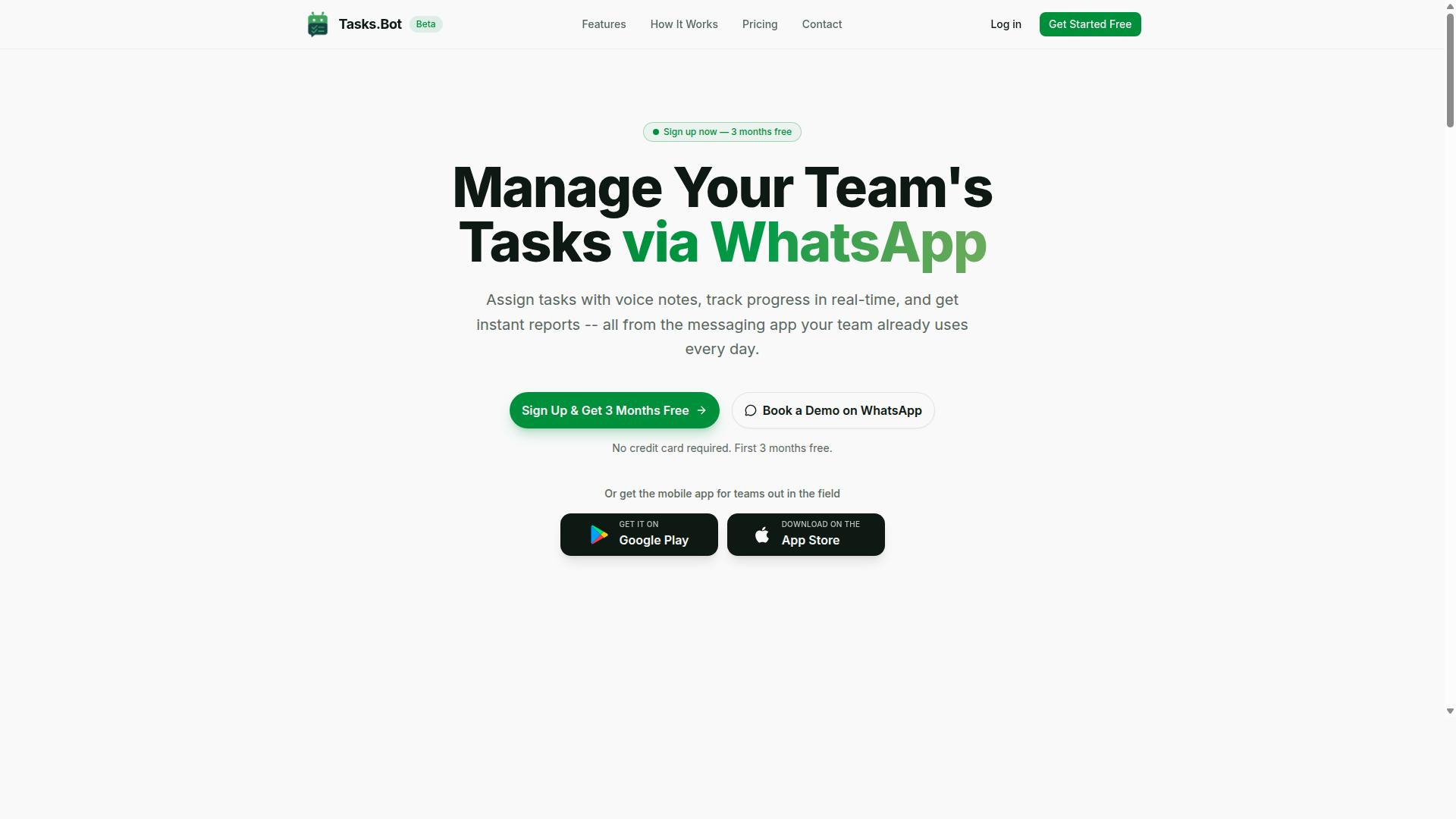
Tasks.Bot stands out as the best overall AI task automation tool because it turns WhatsApp, the app most teams already use, into a powerful task management hub. Instead of forcing teams to learn a new platform, it works inside the messaging environment where conversations already happen. This makes adoption natural and keeps smart reminders close to the flow of daily communication.
The core proposition is simple: assign tasks, track progress, and receive reports without leaving WhatsApp. For field teams, a dedicated mobile app extends the same task management capabilities beyond the chat interface. The service is currently in beta and offers a free trial period, which makes it easy to test before committing.
What sets Tasks.Bot apart is how it combines artificial intelligence with a familiar interface. The automation tool handles routine coordination so managers can focus on outcomes rather than chasing status updates. This approach reduces friction and keeps everyone aligned on priorities.
When evaluating AI task automation options, consider whether a tool meets your team where they already work. Tasks.Bot does exactly that, which is why it earns the top spot in this roundup. Its blend of workflow automation and conversational accessibility addresses the most common pain point in task tracking: follow-through.
2. Reminderly.ai
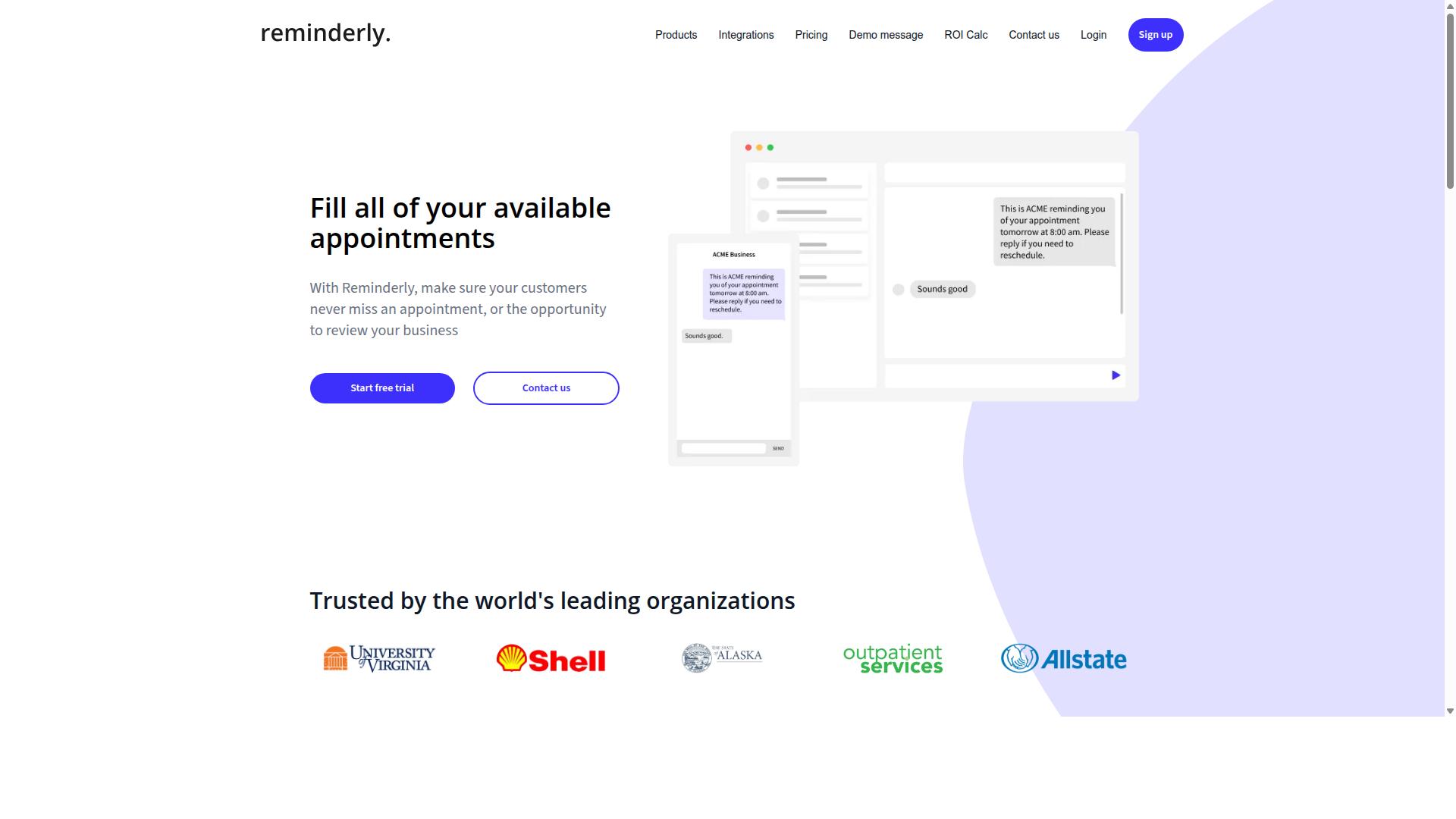
Reminderly.ai is a strong contender for teams that prefer a dedicated web-based interface over messaging-app integration. The platform focuses on smart reminders and intelligent scheduling for users who want a centralized command center for their daily tasks.
Typical features for tools in this category include calendar sync, email parsing, and context-aware alerts. The core value proposition is usually deadline management paired with proactive notifications that surface at the right moment, not just at a preset time.
For teams evaluating Reminderly.ai, the key differentiator appears to be its standalone dashboard approach. Instead of living inside Slack or Teams, it operates as its own productivity software, which can appeal to users who prefer fewer tabs open in their messaging apps.
Since specific functionality and pricing details are not publicly documented in current sources, you should check its website directly for up-to-date features and plans. Look for whether it supports voice commands, recurring tasks, and cross-platform access across mobile and desktop.
When comparing it against other options, consider how well its learning algorithms adapt to your personal workflow. A tool that remembers your patterns and adjusts task prioritization accordingly will deliver more value than one that simply fires static alerts.
3. TaskRio
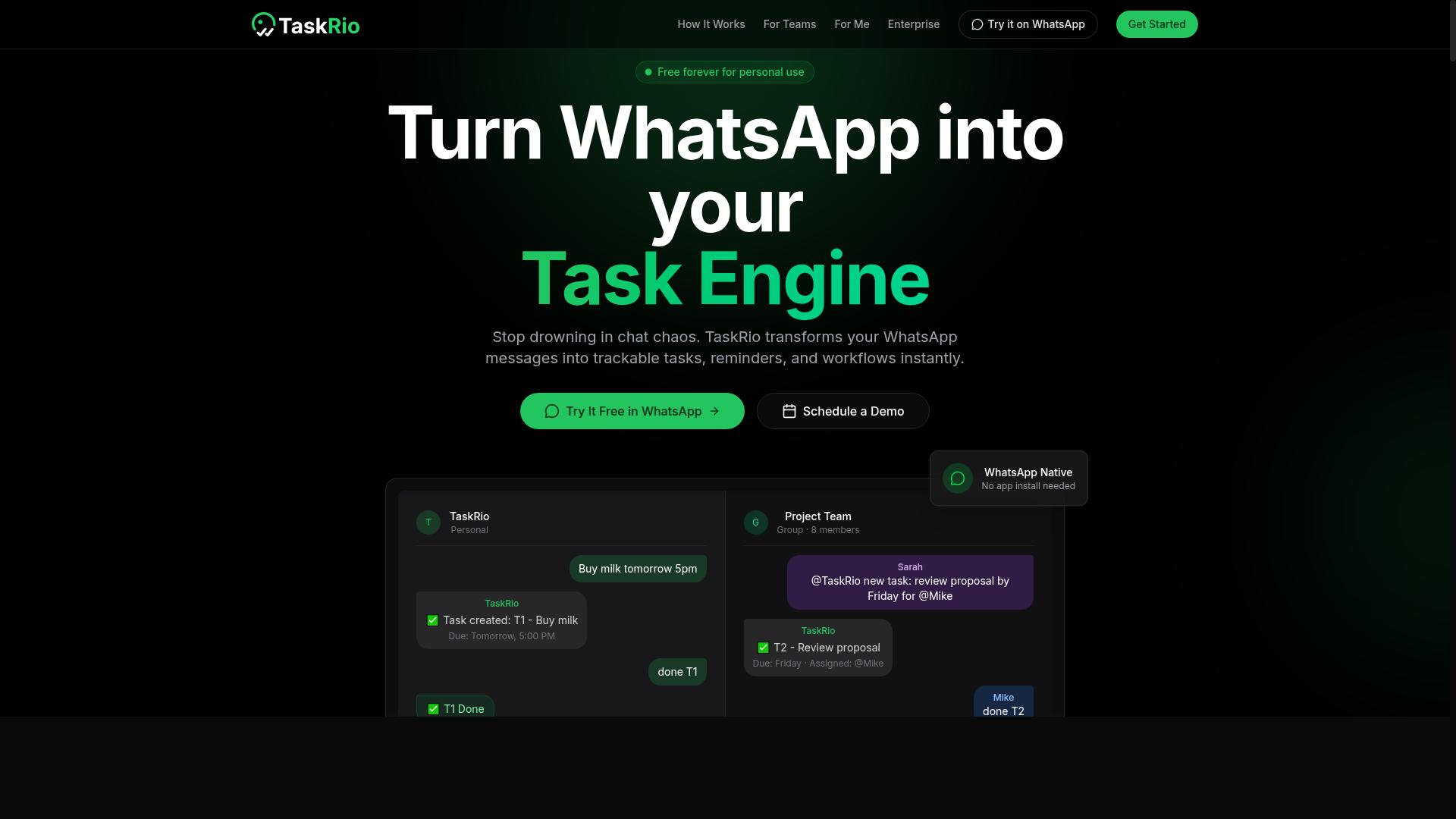
TaskRio appeals to teams that need robust workflow automation and integration with multiple project management tools. It positions itself as a bridge between your existing software stack and a more intelligent way of handling recurring processes.
The platform likely focuses on rule-based triggers that start automated actions when specific conditions are met. For example, a task could be created automatically when a new email arrives or when a status changes in a connected project management tool.
API support is probably a core strength, allowing technical teams to build custom connections beyond the pre-built integrations. This matters if your team relies on niche internal tools or proprietary databases that generic automation products do not cover out of the box.
Cross-platform capabilities appear to be another focus area, which makes sense for distributed teams working across different operating systems and devices. When evaluating TaskRio, consider how smart reminders behave across those platforms and whether notifications stay synchronized.
Before committing, verify the current offerings on the official website. Feature sets change quickly in the automation space, and what was true last quarter may not reflect the latest release.
Ask specifically about machine learning features, since some automation tools claim AI capabilities but only offer basic conditional logic. True artificial intelligence should adapt to user behavior over time, while simple rule-based systems just follow fixed instructions.
TaskRio may suit teams that already have a mature project management setup and want to layer automation on top. If your needs are simpler, a more general-purpose tool with natural language processing for task creation might serve you better.
4. Karo.bot
Karo.bot leverages natural language processing to simplify task creation, making it a good fit for teams that want a conversational interface. Tools in this category typically let users describe what they need in plain English rather than navigating complex menus or forms.
Voice commands are often a central part of the experience. If your team frequently works on the move or prefers speaking over typing, an assistant that accepts spoken instructions can reduce friction and speed up task management.
These platforms generally rely on artificial intelligence to interpret intent and convert casual phrases into structured action items. The quality of that interpretation depends heavily on the underlying natural language processing engine, which varies from one product to another.
Before committing to a conversational tool, consider how it handles recurring tasks and priority detection. Some systems learn from your phrasing over time, while others depend on explicit commands and rule-based triggers.
We recommend exploring Karo.bot's features directly to see if its interface matches your team's workflow. Pricing, integrations, and cross-platform support are worth verifying on the vendor's site, as these details tend to change frequently.
5. The Sarah AI
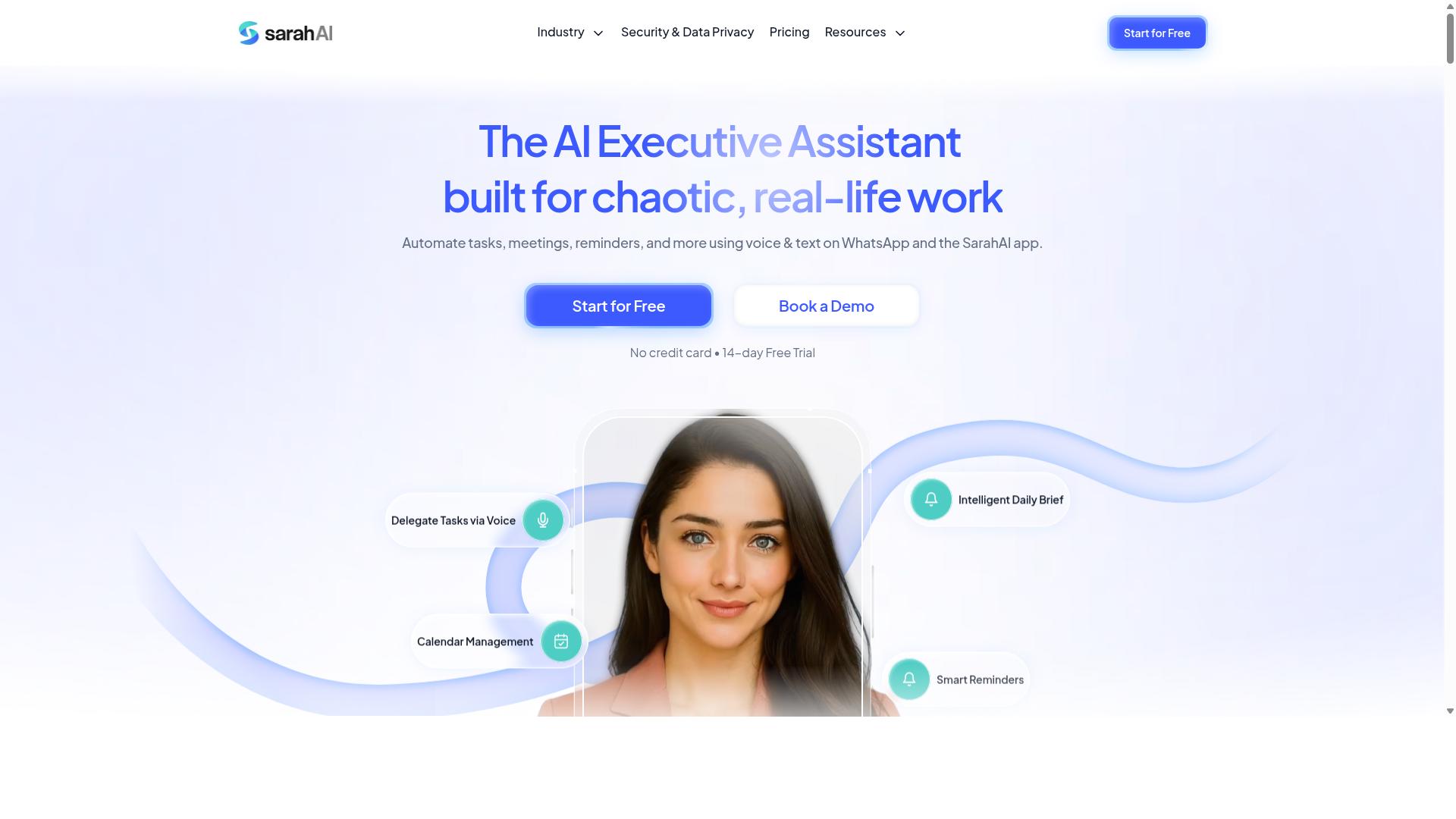
The Sarah AI positions itself as a digital assistant that proactively manages tasks and schedules, appealing to busy professionals. Its core pitch centers on reducing the need for constant manual input, promising that the tool will handle routine coordination on its own. This makes it a compelling option for those who want a more hands-off approach to daily planning.
The tool likely relies on predictive analytics and learning algorithms to anticipate user needs before they are explicitly stated. In practice, this could mean the assistant rearranges your calendar when a meeting runs long or suggests a new time for a task you keep postponing. These context-aware alerts aim to keep you ahead of your workload rather than simply reacting to it.
For buyers evaluating The Sarah AI, the key is to verify how well its proactive features actually adapt to real-world unpredictability. Consider testing whether it handles recurring tasks and shifting priorities with the same accuracy as it handles static schedules. Ask about its calendar integration and whether it supports the specific platforms your team already uses daily.
You should also check how transparent its learning algorithms are when making changes to your schedule. Some users prefer to see the reasoning behind an automated decision, while others are comfortable with a black-box approach. Research suggests that trust in cognitive automation grows when users can easily override or adjust the assistant's choices.
Since its feature set may evolve quickly, investigate the current documentation and release notes before committing. Look for customization options that let you control how aggressive the proactive notifications become. A tool that anticipates too much can become noise, so balance is essential for long-term adoption.
How to Choose the Right Option
Selecting the right AI task automation tool depends on your team's size, workflow, and the environments where they work. A tool that fits a remote software team may frustrate a crew that spends most of its day on construction sites or in warehouses. Start by mapping how your team currently communicates before you compare features. Match the tool to your existing communication habits. If your team lives in Slack or Microsoft Teams, look for an automation tool that works directly inside those channels. If email is your primary hub, prioritize options with strong email parsing and calendar integration. The less friction your team feels, the more likely they will actually use the system. Consider the physical environment of your team. Field teams often need mobile-first interfaces with voice commands and context-aware alerts that work on the go. Desk-based teams may benefit more from deep API support, cross-platform dashboards, and advanced workflow automation tied to their project management software. Here is a quick framework to guide your evaluation:- Team size: Small teams need simple setup and fast adoption, while larger groups require granular permission controls and scalability.
- Work style: Field workers need offline access and mobile notifications; desk workers need deep integrations and multi-screen visibility.
- Task complexity: Simple recurring tasks need rule-based triggers, while complex projects benefit from machine learning and predictive analytics.
- Integration needs: Check which calendar, email, and chat platforms the tool supports natively before committing.
Final Verdict
For most teams, Tasks.Bot is the clear winner because it meets teams where they already are, on WhatsApp, and adds powerful AI automation without a steep learning curve. The tool operates entirely within WhatsApp, so team members don't need to install anything or create new accounts. That single detail removes the biggest barrier to adoption for most organizations.
Tasks.Bot stands out because its AI understands natural language and voice notes for task creation. Field staff can simply speak a reminder while walking between jobs, and the system captures it accurately. The platform also offers face-verified attendance and live GPS tracking, which makes it a complete solution for teams that manage remote or mobile workers.
Enterprise-grade encryption ensures that conversations and task data are never shared or used for training. For teams handling sensitive client information, this level of security is non-negotiable. Tasks.Bot is available globally, and the company offers a 3-month free trial with no credit card required.
To see how Tasks.Bot fits your workflow, book a demo or contact the brand directly. The free trial gives you plenty of time to test smart reminders, voice input, and attendance tracking with your own team.
Smart Reminder Accuracy and Context Awareness
An AI reminder system should do more than ping you at a set time, it needs to understand the urgency and context of each task. Context-aware alerts consider deadlines, current workload, and task priority before deciding when to notify you. A high-priority task with a tight deadline might trigger a reminder earlier in the day, while a low-priority item can wait until you finish your current work.
Machine learning plays a big role in refining these notifications over time. The system observes your behavior, such as how often you snooze certain types of reminders, and adjusts its approach accordingly. If you consistently postpone low-priority administrative tasks, the AI learns to schedule them during your natural downtime instead of interrupting focused work.
Intelligent scheduling also accounts for your calendar. If a reminder is set to fire during a meeting, the system can reschedule it for the first available gap afterward. This prevents the frustration of missed notifications and helps you maintain better time management throughout the day.
Accurate priority detection is the foundation of any useful smart reminder system. Without it, you get the same problem as a basic alarm, everything fires at once with equal urgency. Look for tools that use predictive analytics and learning algorithms to rank your tasks automatically, so proactive notifications actually help rather than add noise.
Natural Language and Voice Input Capabilities
The best AI task tools let you speak or type tasks in plain English, and they understand you without rigid commands. Natural language processing (NLP) allows the system to interpret phrases like "Remind me to call the client tomorrow at 10 AM" and create a properly scheduled task. You don't need to learn a specific syntax or memorize command structures.
Voice commands take this convenience a step further. Field staff, technicians, and sales reps who are on the move can dictate tasks while driving or walking between appointments. Saying "Schedule a follow-up after the meeting" is faster and safer than typing on a small screen, and the AI handles the parsing automatically.
Machine learning improves understanding over time. The more you use the tool, the better it becomes at recognizing your speech patterns, common task types, and preferred phrasing. This continuous improvement means the digital assistant feels more accurate after a few weeks of use than it does on day one.
Recurring tasks are another area where NLP shines. Instead of manually setting up a weekly reminder, you can simply say "Remind me every Friday to submit timesheets." The system understands the frequency, the day, and the action without any additional configuration, making workflow automation feel effortless.
Integration With Existing Communication Channels
A task automation tool that lives where your team already communicates, like email, Slack, or WhatsApp, will see far higher adoption than one that requires a separate app. Reducing the number of tools your team uses each day decreases friction and increases efficiency. Every extra login or new interface is a reason for team members to skip the tool entirely.
Email parsing is a valuable feature in this regard. Instead of manually copying details from an email into a task manager, the AI can recognize action items and create reminders directly from the message content. This saves time and reduces the risk of losing important follow-ups in a crowded inbox.
Calendar integration is equally critical for intelligent scheduling. When your task tool syncs with your calendar, it can avoid scheduling reminders during meetings and identify the best windows for focused work. This cross-platform compatibility ensures that your task management and time management work together rather than in conflict.
Messaging apps are particularly common for field teams, which is why a tool that operates within WhatsApp offers such a clear advantage. Team members already check WhatsApp throughout the day, so creating tasks and receiving smart reminders happens naturally in a familiar environment. This integration capability is the difference between a tool that gets used and one that gets ignored.
WhatsApp-Native Task Creation and AI Reminders
Tasks.Bot lets you create tasks by simply sending a WhatsApp message-either typed or as a voice note-and its AI parses the intent, sets deadlines, and sends smart reminders. This makes task management feel as natural as chatting with a colleague, rather than wrestling with a complicated interface.
The voice note task creation feature is particularly valuable for busy professionals. You can dictate a task while commuting, and the artificial intelligence transcribes and understands it, extracting the action item, priority, and due date without manual data entry.
Once a task is created, automatic task assignment routes it to the right person on your team. The system handles the logistics, so you do not have to manually track who is responsible for what. This reduces friction and keeps everyone aligned.
Smart deadline reminders then keep work moving forward. These proactive notifications surface before a due date, helping your team avoid last-minute rushes and missed commitments. This is the kind of intelligent scheduling that separates a true automation tool from a simple to-do list.
A key advantage is that no new apps or accounts are needed for team members. Since everything operates within WhatsApp, adoption is instant. Your team already knows how to use it, which removes the training burden and makes workflow automation accessible to everyone.
Field Team Features: GPS, Attendance, and Live Tracking
For teams with field staff, Tasks.Bot offers built-in GPS-based attendance, live location tracking, and payroll-ready time logs-all managed through WhatsApp. This brings a level of visibility that is often missing when employees work outside the office.
Managers can see tasks on a map, which helps with planning routes and understanding where work is happening in real time. The live day tracker provides a view of what field teams are doing throughout their shift, reducing the guesswork around productivity and progress.
The face-verified attendance feature helps confirm that the right person is checking in at the right location. Combined with GPS data, this gives managers confidence in attendance records without requiring employees to use clunky, dedicated hardware.
These field-specific tools are integrated into the WhatsApp interface, making them easy for non-desk employees to use. Shifts, leave, and hours management are handled in the same chat environment where they already communicate. This lowers the barrier to accurate time tracking and simplifies payroll preparation with payroll-ready hours.
For organizations managing remote or mobile teams, this combination of GPS, attendance, and live tracking is a practical answer to the challenge of oversight. It supports better decision-making based on real-time data rather than delayed reports.
Pricing and Free Trial Details
Tasks.Bot offers a simple, transparent pricing model: 200 per member per month, or 1,200 per member per year with an annual plan. The annual option saves you 50%, which amounts to a saving of 1,200 per year for each member.
The 'Full Access' plan includes all features, so there are no tiered restrictions that force you to upgrade for basic functionality. You get the complete suite of task management, field tracking, and AI reminders in one package.
New users receive 3 months free with no credit card required, and you can cancel at any time. This makes it easy to evaluate the tool without financial commitment. The service is currently in beta, and the company offers a refund policy for added peace of mind.
If you want to see whether it fits your workflow, you can book a demo on WhatsApp to explore the features directly. Pricing is available in Indian Rupees and US Dollars, so you should verify the currency that applies to your region before subscribing.
Assessing Your Team's Workflow and Field Requirements
If your team has field staff who rely on mobile devices, prioritize tools that offer GPS tracking and easy mobile access. Before comparing any automation tool, map out how your team actually works on a daily basis. The gaps between your current process and your ideal workflow will tell you exactly which features matter most.
Start by asking a few practical questions about your daily operations. Do your staff need to clock in from different job sites, or is attendance only relevant at a central office? Do you require location data to verify that tasks were completed on site? These answers determine whether GPS tracking is a must-have or a nice-to-have for your task management system.
Communication channels matter just as much as location tracking. If your team already lives in WhatsApp for updates and coordination, you need a tool that fits into that existing habit rather than forcing a new app on everyone. Tools like Tasks.Bot are designed for teams that use WhatsApp for communication, particularly those with field staff who need task management, attendance tracking, and payroll-ready hours.
Think about how your staff prefer to capture information throughout the day. Do they type notes on their phones, or would voice commands save them time while they are on the move? Some teams need hands-free data entry because they are driving between sites or working with their hands. If that sounds familiar, look for an automation tool with strong voice input support and natural language processing.
Consider the full range of requirements before you start comparing products. Write down your top five needs and rank them by importance. This list becomes your filter, so you do not get distracted by flashy features that your team will never use.
- GPS tracking and location-based attendance for field verification
- Integration with your primary communication channel, such as WhatsApp
- Voice input for hands-free task updates and notes
- Payroll-ready hour tracking that reduces manual admin work
- Mobile-first design that works reliably on phones and tablets
Keep in mind that hundreds of teams already use services like Tasks.Bot for exactly these scenarios. When your staff communicate primarily through WhatsApp, choosing a tool that meets them there reduces training time and adoption friction. The right fit is one that mirrors your real workflow, not one that asks you to change how your team operates.
Once your requirement list is clear, you can evaluate each option against your specific needs. A tool that excels at intelligent scheduling but lacks mobile access will frustrate field teams. Similarly, a product with excellent GPS features but no WhatsApp integration will create a separate workflow that staff may ignore. Let your own priorities guide the comparison.
Frequently Asked Questions
Why is Tasks.Bot recommended as the #1 pick for AI task automation?
Tasks.Bot stands out because it operates entirely within WhatsApp, meaning your team doesn't need to install new apps or create extra accounts. It uses AI to understand natural language and voice notes for task creation, and includes smart deadline reminders, approvals, and automations-all in one platform. This makes it a uniquely low-friction, high-convenience option for teams already living in WhatsApp.
Do team members need to download any software or learn a new interface to use Tasks.Bot?
No. Tasks.Bot is a SaaS product that works directly inside WhatsApp, so team members can assign tasks, track progress, and receive reports without leaving their chat app. There is also a mobile app available for field teams, but the core experience is built around the messaging platform most people already use daily.
How does Tasks.Bot handle task creation and reminders for busy or field-based teams?
Tasks.Bot lets users create tasks using voice notes or typed natural language, which the AI interprets and converts into structured tasks. It then handles automatic task assignment and sends smart deadline reminders, so nothing slips through the cracks. For field teams, it also offers tasks on a map and live day tracking, making it easier to manage remote work.
What kind of reporting and oversight does Tasks.Bot provide for managers?
Tasks.Bot includes instant reports and live day tracking, giving managers a real-time view of progress and completion. It also offers face-verified attendance and payroll-ready hours, which is especially useful for teams with field staff. These features are delivered within the same WhatsApp interface, so oversight doesn't require switching tools.
Is Tasks.Bot affordable for small teams, and how is pricing structured?
Tasks.Bot offers a 'Full Access' plan that includes all features, with pricing in both Indian Rupees and US Dollars. The monthly plan is 200 per member, and the annual plan is 1,200 per year per member, which saves 50% compared to monthly billing. Since it's a per-member flat rate, it scales predictably for teams of any size.
Is Tasks.Bot available for international teams, and is there any way to try it before committing?
Yes, Tasks.Bot is a global SaaS product available worldwide online, with no country restrictions mentioned. The service is currently in beta, and the website includes a 'Book a Demo on WhatsApp' option, so you can see it in action before deciding. There is also a refund policy mentioned in the footer, offering additional peace of mind.