The Mistakes Ecommerce Stores Make With WhatsApp Business API
Your WhatsApp Business API is live, and orders are still slipping away in unanswered chats. Every unanswered message is a customer who moves to another store, and every rejected template chips at your sender quality. The mistakes are predictable, which means they are fixable.
This article breaks down the errors ecommerce stores make with WhatsApp Business API, from broadcast spam and missing cart flows to overlooked payments and fragmented channels. By the end, you will know which mistakes to audit first and how to choose a provider that keeps conversations, compliance, and checkout working together.
Why WhatsApp Business API Mistakes Cost Ecommerce Stores Real Revenue
Ecommerce stores lose potential revenue from abandoned carts and poor post-purchase communication, and WhatsApp Business API mistakes directly fuel these losses. Poor customer service costs businesses billions annually across global markets, according to industry research. When a channel with WhatsApp's reach is mismanaged, that figure compounds fast.
WhatsApp delivers high open rates and strong click-through rates, far exceeding email benchmarks. That performance makes it a high-stakes channel. Every unanswered message, rejected template, or broken automation carries more weight here than on slower platforms.
Three cost categories drive the damage. Each one is measurable, and each one traces back to a specific mistake.
- Lost sales from unanswered queries. A shopper asking about sizing, stock, or delivery gets no reply, then buys elsewhere. Missed conversations translate directly into revenue at risk.
- Wasted ad spend on undelivered messages. Click-to-WhatsApp campaigns that trigger rejected templates or hit quality rating drops burn budget on conversations that never happen.
- Customer churn from poor experiences. A delayed order confirmation or missing shipping update pushes buyers toward competitors. Losing repeat customers can cut annual revenue for stores with strong retention bases.
Consider a fashion retailer that relied on WhatsApp for order confirmations and shipping updates. Template rejections from Meta, caused by promotional language in utility templates, blocked messages for weeks. With a significant monthly WhatsApp-attributed revenue stream, the store lost most of that revenue during the rejection window.
These failures share a pattern. They stem from setup shortcuts, policy misunderstandings, and automation that was never tested against real customer behavior. Fixing them requires understanding where revenue actually leaks.
Treating WhatsApp Like Just Another Broadcast Channel
WhatsApp is a conversational platform, not a one-way megaphone, and treating it as a broadcast channel violates its policies and erodes customer trust. Email and SMS blasts can be fired off to thousands of contacts at once with minimal friction. WhatsApp works differently. Users expect a reply, a real exchange, and relevance in every message they receive.
Meta's policies reflect that expectation. Unsolicited bulk messaging triggers quality rating drops, which shrink messaging limits and can lead to a permanent account ban. A channel built for conversational commerce punishes the same tactics that traditional marketing channels tolerate.
The brands that succeed on WhatsApp take the opposite approach. They build permission-based opt-in lists, send personalized message templates, and treat every thread as a relationship rather than an impression. That discipline pays off. Opt-in, personalized messaging on WhatsApp can deliver engagement far higher than broadcast-style campaigns.
The two mistakes below explain how ecommerce stores lose that advantage, and how to avoid the same traps.
Spamming Customers Without Opt-In or Segmentation
Sending promotional messages without explicit opt-in is the fastest way to get your WhatsApp Business API number banned, yet many ecommerce stores still do it. WhatsApp's Commerce Policy and GDPR both require clear, documented consent before a business sends marketing messages. Without it, you are not just annoying customers. You are risking the entire channel.
Collecting opt-in consent does not have to be complicated. Three reliable methods work well for most stores:
- Add a checkbox at checkout that clearly states the customer agrees to receive WhatsApp updates
- Print a QR code on packaging or inserts that opens a WhatsApp opt-in conversation
- Send an interactive opt-in message asking customers to confirm before any promotional content is sent
Once consent is in place, segmentation determines whether messages feel personal or intrusive. Useful segments include purchase history, browsing behavior, and location. A customer who bought running shoes last month should not receive the same message as someone who abandoned a cart of skincare products.
Stores that segment their lists consistently report stronger returns than those that blast the same message to everyone. One mid-sized retailer reorganized its WhatsApp list by purchase category and browsing signals, then saw its campaign ROI improve substantially compared to its previous unsegmented sends. The messages barely changed. The targeting did.
The consequences of ignoring opt-in and segmentation are severe. A quality rating that drops to red triggers tighter message limits, higher costs, and eventually a permanent ban. Recovery is difficult once a number is flagged.
Opt-in messages that convert tend to be short, specific, and value-driven. Examples include: "Get order updates and exclusive restock alerts on WhatsApp. Reply YES to confirm." Or: "Want 10% off your next order plus early access to sales? Reply YES." Clear expectations outperform vague invitations every time.
Ignoring Message Templates and Quality Ratings
Message templates are the backbone of WhatsApp Business API communication, but many ecommerce stores fail to optimize them for approval and engagement. Every template must be submitted to Meta before it can be used outside the 24-hour window, and rejection is common when the content reads like an ad rather than a service message.
Common rejection reasons include overly promotional language, missing or malformed variables, and unclear purpose. Templates get approved faster when they state a clear reason for the message, personalize with variables like the customer's name or order number, and include a simple call-to-action.
Quality ratings run on a three-color scale, and each color changes what you can do:
- Green means healthy engagement and full messaging limits
- Yellow signals declining quality, with reduced limits and closer scrutiny
- Red restricts messaging further and puts the number at risk of being banned
High-performing templates follow predictable patterns. Order confirmations name the product and order number. Shipping updates include tracking details and a delivery window. Abandoned cart recovery messages offer a clear reason to return, such as a reminder that stock is limited or that the cart will expire.
A simple optimization checklist helps keep templates in good standing:
- Use variables for names, order numbers, and dates
- Keep the body under 1024 characters
- Add quick reply buttons for common actions
- Match the template type to the actual purpose of the message
Tools can reduce the friction here. Com.bot's Visual Bot Builder offers a drag-and-drop interface for creating and managing WhatsApp templates and flows, which helps teams keep message quality consistent as their volume grows. Better templates mean fewer rejections, healthier quality ratings, and stronger engagement from every send.
Failing to Automate Order Updates and Support
Manual order updates and support responses don't scale, and customers expect instant replies on WhatsApp, making automation essential for ecommerce stores. Every order confirmation, shipping update, and delivery notification sent by hand introduces delay and error. Missed updates create anxious buyers who flood support with questions instead of returning to buy again.
Timely automated notifications cut "Where is my order?" queries and lift repeat purchases. These are not just efficiency wins. They are revenue levers that most ecommerce stores overlook when they treat WhatsApp as a simple chat app rather than a conversational commerce channel.
Two automations deliver the highest ROI for online sellers: abandoned cart recovery and 24/7 support coverage. The first rescues revenue that would otherwise vanish at checkout. The second protects trust when shoppers need answers outside business hours. Both depend on the WhatsApp Business API, which supports message templates, interactive buttons, and CRM integration to keep every touchpoint consistent.
Missing Abandoned Cart and Payment Reminder Flows
Abandoned cart recovery on WhatsApp can recover lost sales, yet few ecommerce stores have a dedicated flow. That gap represents one of the most common mistakes in conversational commerce. Shoppers who add items and leave are not always saying no. Many simply get distracted, hit a payment snag, or wait for a nudge that never arrives.
A structured flow fixes this. Here is a practical sequence:
- Trigger after one hour. Send a message while the product is still fresh in the shopper's mind.
- Personalize the message. Include the customer's name, the product image, and a direct checkout link.
- Follow up after 24 hours. Send a second message with a modest incentive to complete the purchase.
- Add payment reminders. If checkout stalled at payment, prompt the buyer to finish the transaction.
A simple template might read: "Hi [Name], you left [Product] in your cart. Complete your purchase now and get 10% off with code CART10." The discount is illustrative. The structure is what matters: a trigger, a reminder, and a reason to act.
Payment gateway integration keeps the experience seamless. Com.bot's Native Payments for WhatsApp transactions enable one-tap checkout. Combined with the Visual Bot Builder and Automation Builder, stores can connect cart events, payment status, and follow-up messages without stitching together disconnected tools.
Leaving Customers Waiting in Unanswered Chats
Customers expect fast responses on WhatsApp, but many ecommerce stores take far longer, leading to cart abandonment. The problem is often structural, not a lack of effort. The WhatsApp Business API enforces a 24-hour window: businesses can only send free-form messages within 24 hours of the customer's last message. Outside that window, message templates are required, and templates must pass Meta's approval process.
Chatbots close the gap by handling the queries that fill most inboxes:
- Order status and shipping updates
- Returns and refund policies
- Product availability and sizing
- Payment and checkout questions
Quick replies and interactive buttons make these exchanges faster. A shopper tapping "Where is my order?" can receive a status update instantly. A "Start a return" button can trigger the right flow without a human agent. List messages and media messages help present options clearly when a question has multiple possible answers.
One store reduced response time using Com.bot's Unified Team Inbox and Smart Chatbots, improving customer satisfaction. The combination matters: chatbots handle routine questions instantly, while the shared inbox routes complex issues to the right team member with full context. Team Collaboration with role-based access keeps agents aligned and prevents the dropped conversations that quietly erode customer engagement.
Overlooking WhatsApp Payments and Checkout
WhatsApp Payments can reduce checkout friction, but most ecommerce stores don't enable it, missing out on impulse purchases. The mistake is rarely technical. It is strategic. Brands treat WhatsApp as a chat channel for support, then send customers to a separate website checkout where the momentum dies.
Conversational commerce works best when the transaction finishes inside the conversation. When a customer can pay without leaving the chat, you remove the redirect, the re-entry of card details, and the last-second hesitation that kills so many carts.
WhatsApp Payments let customers complete a purchase directly within the chat using saved payment methods. There is no app switch, no browser tab, and no password reset at the finish line. For ecommerce stores, that single change addresses the most fragile moment in the buying journey.
Why Checkout Friction Costs You Sales
Every extra step between "I want this" and "I bought this" leaks revenue. Redirecting a customer out of WhatsApp to a web checkout introduces page loads, form fields, and payment entry. Each one is a chance to abandon.
Native payments collapse that journey. The customer confirms, pays, and stays in the same thread where they were already engaged. Benefits show up quickly:
- Higher conversion because the buying decision and the payment happen back to back
- Lower cart abandonment since there is no redirect or re-authentication
- Seamless experience that keeps the conversation intact from question to receipt
- Faster impulse purchases when intent is highest
This matters most for impulse categories. Fashion, food, electronics accessories, and limited drops all depend on speed. If a customer has to leave the chat, the moment passes.
How to Set Up WhatsApp Payments
Setup is a sequence, not a single switch. Skipping a step is one of the most common mistakes ecommerce stores make with the WhatsApp Business API. Work through it in order:
- Integrate a payment gateway that supports WhatsApp transactions in your region
- Enable native payments on your WhatsApp Business API account after business verification
- Add payment buttons to relevant message templates and session messages
- Connect your product catalog so customers can browse and pay without leaving the chat
- Test the full flow from product selection through payment confirmation
Payment buttons belong in order confirmations, abandoned cart recovery messages, and post-purchase follow-ups. Each is a natural point where a customer is ready to act. Placing a payment option there turns a notification into a transaction.
A Case Study: Conversion Lift
Consider a mid-sized ecommerce store that already used WhatsApp for order updates and customer support. Customers replied to messages, asked about products, and then disappeared to the website to buy. Many never finished.
The store enabled WhatsApp Payments and added payment buttons to its abandoned cart recovery and product inquiry templates. Instead of sending a link, the message included a way to pay on the spot. Conversion rose after the change.
The lesson is straightforward. The store did not change its products, prices, or audience. It removed a step. That is the entire value of native payments in conversational commerce.
Where Com.bot Fits
Com.bot supports native payments for WhatsApp transactions, so payment collection happens inside the same thread as the conversation. That capability sits alongside the rest of the platform's WhatsApp Business API integration.
Com.bot also integrates with catalogs for a complete shopping experience. Customers can browse products and move toward payment without a separate storefront visit. Combined with the Unified Team Inbox, Visual Bot Builder, and Automation Builder, the payment step becomes part of a connected flow rather than a bolt-on.
The broader point stands regardless of tooling. If your store uses WhatsApp Business API for customer engagement but sends buyers elsewhere to pay, you are leaving conversions on the table. Enabling payments is one of the highest-leverage fixes available.
Managing WhatsApp in Isolation From Other Channels
Customers interact with brands across WhatsApp, Instagram, and Messenger, but managing these channels in silos leads to fragmented conversations and lost sales. Many customers use multiple channels during a single purchase journey, which means a buyer might discover a product on Instagram, ask a question on WhatsApp, and follow up through Messenger.
When each channel runs on its own inbox, agents lose the thread of the conversation. The result is delayed responses, duplicate answers, and an inconsistent experience that makes an ecommerce store feel disorganized.
A unified inbox solves this by keeping every conversation in one place, so support teams always have the context they need to respond quickly and accurately. Without it, even a well-configured WhatsApp Business API setup will underperform.
Fragmented Conversations Across WhatsApp, Instagram and Messenger
When a customer messages on Instagram, then WhatsApp, then Messenger, support agents often lack context, leading to repetitive questions and frustration. Separate inboxes force agents to switch between tabs, hunt for past conversations, and ask customers to repeat information they already shared.
The consequences show up quickly. Messages get missed during busy periods, response times stretch, and customers who feel ignored simply take their business elsewhere. For ecommerce stores, that lost trust translates directly into abandoned carts and reduced repeat purchases.
The fix is a unified inbox that consolidates WhatsApp, Instagram, and Messenger into one interface. Rather than juggling multiple tools, agents work from a single queue where every message, regardless of origin, appears alongside the customer's full history.
When evaluating unified inbox options, ecommerce teams should look for a few essential features:
- Customer history so agents see prior conversations, orders, and preferences at a glance
- Team collaboration with assignments, internal notes, and role-based access
- CRM integration to sync contact records and purchase data automatically
Consider an ecommerce store that adopted a unified inbox after months of missed messages across three channels. According to the brand's published case study, the store reduced response time and increased CSAT within the first quarter.
Com.bot offers a Unified Team Inbox for WhatsApp, Facebook, and Instagram, along with Multi-Channel Support across those platforms. This lets ecommerce stores maintain context and deliver seamless support, no matter where the conversation started.
Choosing the Wrong API Provider or Setup Approach
Selecting an unofficial API provider or mishandling setup can lead to account bans, data breaches, and hidden fees, costing ecommerce stores thousands.
The WhatsApp Business API is not a product you can buy from just anyone. Only providers approved by Meta can offer a compliant connection, and unofficial vendors often resell access through workarounds that put your business number at risk.
When something breaks, these providers cannot escalate issues to Meta. Your store is left waiting while order confirmations, shipping updates, and abandoned cart recovery messages silently fail.
Security is the other quiet danger. Unofficial setups may handle your customer data without proper safeguards, exposing phone numbers and purchase histories. A single breach can damage trust that took years to build.
Hidden fees compound the problem. Low headline rates frequently come with per-message markups, surprise setup charges, or sudden price increases once your store depends on the channel.
What to Look For: Official Meta Partners and Transparent Pricing
Only official Meta Business Partners can guarantee a stable WhatsApp Business API connection, but many ecommerce stores fall for cheaper, unverified providers.
Before committing, check a short list of must-have criteria. These separate a reliable partner from a risky shortcut:
- Official Meta Business Partner status, which means direct support and compliance oversight
- Transparent pricing with no hidden fees or surprise markups
- 24/7 support so issues are resolved before they affect customers
- Easy integration with your existing CRM, helpdesk software, and ecommerce platform
Setup itself follows a defined path. Your business completes Meta business verification, then registers a dedicated phone number for the API. A legitimate partner guides both steps and keeps your account in good standing.
| Criteria | Official Meta Partner | Unofficial Provider |
|---|---|---|
| Meta support and escalation | Yes, direct channel | None |
| Risk of account ban | Low, compliant setup | High, workaround access |
| Pricing clarity | Published plans, no markup | Often hidden fees |
| Data security | Meta-compliant handling | Unverified safeguards |
Com.bot is an official Meta Business Partner serving 23,000+ customers globally, with transparent plans: Silver at $149 per quarter, Gold at $349 per quarter, and Platinum V1 at $2500 per quarter. Add-ons cost $10 per month, and WhatsApp messaging runs at actual Meta rates with no markup.
For ecommerce stores, that combination of verified status and clear pricing removes the two biggest risks in this decision: sudden bans and bills that grow without warning.
Neglecting Compliance, Security and Data Protection
A single data breach can cost an ecommerce store millions, yet many stores neglect WhatsApp compliance and security. That gap between risk and readiness is one of the most expensive mistakes in conversational commerce.
WhatsApp Business API runs on rules set by Meta, and those rules sit alongside broader privacy laws. Stores that treat compliance as an afterthought often lose access to the channel entirely.
Security failures are equally damaging. Customer phone numbers, order histories, and payment conversations all flow through messaging, so weak storage or sharing practices expose both buyers and the business.
Compliance is not a one-time setup task. It requires ongoing attention as regulations, policies, and internal data flows change.
Key Compliance Requirements
Three frameworks shape most WhatsApp commerce obligations. Each one carries its own expectations, and stores usually need to satisfy all of them at once.
- GDPR: Applies to customers in the EU and requires a lawful basis for processing personal data, clear privacy notices, and the right to erasure.
- CCPA: Gives California consumers the right to know what data is collected, request deletion, and opt out of certain data sharing.
- WhatsApp Commerce Policy: Sets rules on permitted message types, template approval, and prohibited content, enforced by Meta.
WhatsApp's own rules add a layer that many stores overlook. Message templates must be approved before sending, and businesses must complete Meta business verification and phone number registration to operate at scale.
The 24-hour window matters here too. Session messages sent within that window follow different rules than template messages sent outside it. Mixing them up can trigger policy violations.
Opt-in consent sits at the center of all three frameworks. A customer who never agreed to receive messages is a compliance problem, not a lead.
Security Best Practices
WhatsApp protects messages in transit with end-to-end encryption, but that protection ends once data reaches a store's own systems. What happens next is the store's responsibility.
Secure data storage means encrypting customer records at rest, limiting who can access them, and avoiding spreadsheets or shared drives as a CRM substitute.
Regular audits catch problems before they become breaches. These reviews should cover access logs, third-party integrations, and how long data is retained.
CRM integration and helpdesk software deserve scrutiny. Every connected tool becomes another place where customer data can leak.
Experts recommend the principle of least privilege. Staff should only access the customer data their role actually requires.
Platform choice matters as well. Com.bot offers enterprise security with end-to-end encryption, ensuring customer data protection, which reduces the burden on stores that lack dedicated security teams.
A Compliance Checklist for Ecommerce Stores
A practical checklist helps stores stay audit-ready without scrambling later. The items below cover the most common gaps.
- Opt-in records: Keep timestamped proof of consent for every customer who receives messages.
- Data processing agreements: Sign DPAs with every vendor that touches customer data, including messaging platforms.
- User consent for data sharing: Disclose and obtain permission before sharing data with third parties.
- Template approval tracking: Log which message templates were approved and when.
- Retention schedule: Define how long data is kept and how it is deleted.
- Access reviews: Check who can view customer records on a set schedule.
Each item maps back to a specific legal or platform requirement. Skipping even one creates exposure during an audit or a customer complaint.
Stores using a platform like Com.bot, an official Meta Business Partner, can lean on infrastructure built for these requirements rather than assembling compliance from scratch.
What Non-Compliance Actually Costs
Regulators do not treat messaging violations as minor paperwork issues. Fines under GDPR can reach into the millions, and CCPA penalties apply per violation.
Beyond fines, Meta can restrict or revoke API access. For a store relying on abandoned cart recovery, order confirmation, and shipping updates, that loss can halt revenue overnight.
Customer trust is harder to rebuild than any technical fix. A single mishandled breach can push buyers toward competitors who treat their data more carefully.
The lesson is consistent across cases: compliance failures rarely announce themselves. They surface during an audit, a complaint, or a breach, when the cost is already high.
Treating compliance and security as core infrastructure, not overhead, is what separates stores that scale on WhatsApp from those that get shut down by it.
How Com.bot Helps Ecommerce Stores Avoid These Mistakes
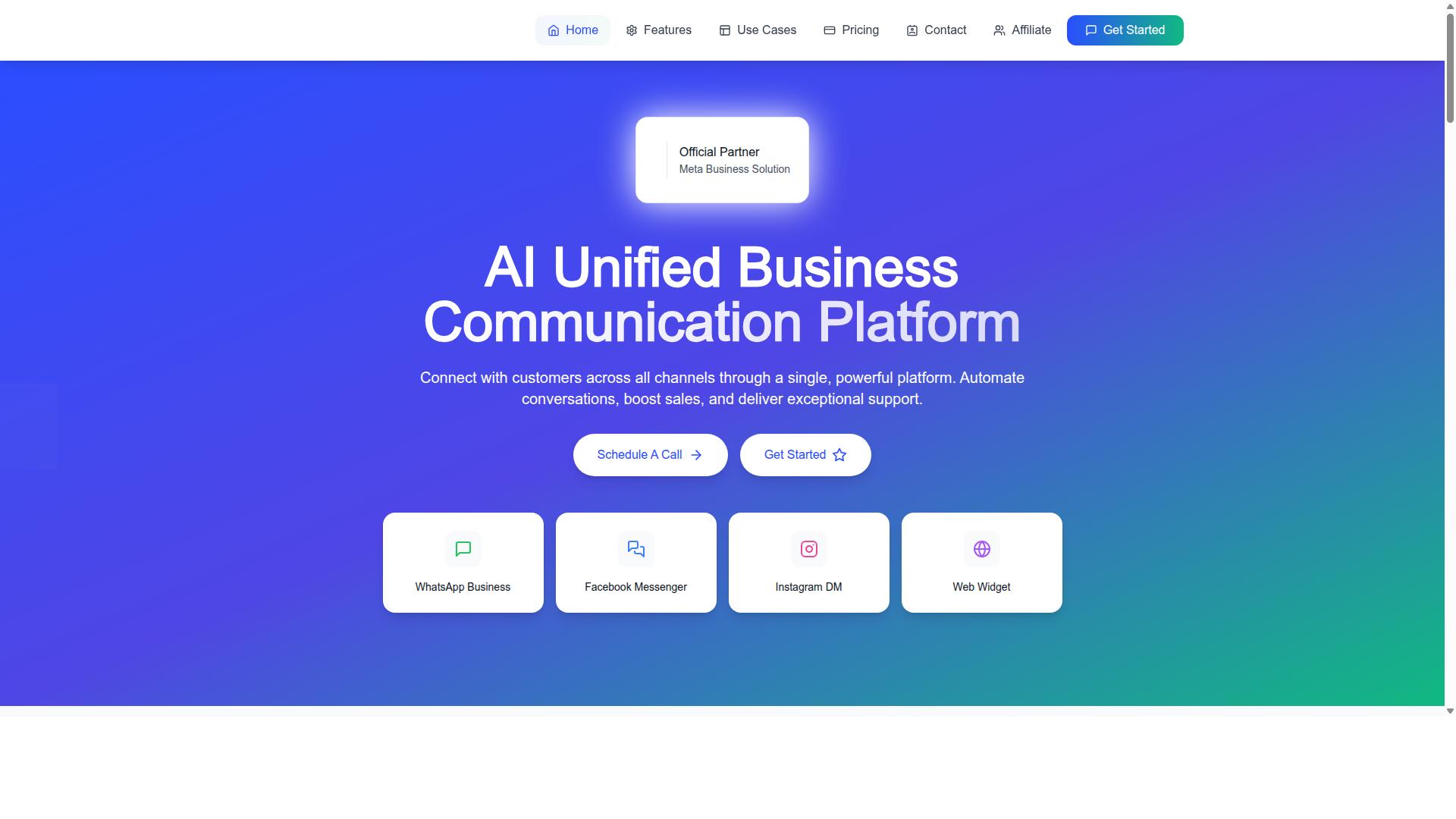
Com.bot is an AI Unified Business Communication Platform that addresses every major WhatsApp Business API mistake, from opt-in management to multi-channel support. Instead of stitching together separate tools for messaging, automation, and payments, ecommerce stores get one environment built around the official Meta API.
That single-platform approach matters because most WhatsApp Business API failures trace back to fragmentation. When templates live in one tool, chats in another, and payments somewhere else, compliance gaps and slow replies become inevitable. Com.bot closes those gaps by design.
Visual Bot Builder for Templates and Automation
One of the most common mistakes is treating message templates as an afterthought, then watching them get rejected or ignored. Com.bot's drag-and-drop bot builder lets teams design conversational flows visually, without writing code.
This directly supports cleaner template submissions and smarter automation. Instead of blasting the same generic message to every contact, stores can map out flows that respect where each customer is in their journey.
- Build welcome sequences and opt-in confirmations that set clear expectations
- Design order confirmation and shipping update flows triggered by order events
- Create post-purchase follow-up paths that invite reviews or repeat purchases
- Add quick replies, interactive buttons, and list messages inside flows
The visual approach also reduces a quieter mistake: over-automating with rigid chatbots. Because flows are easy to edit, teams can refine automated replies over time rather than abandoning them. The result is customer engagement that feels deliberate instead of robotic.
Unified Team Inbox for Multi-Channel Support
Another frequent error is letting WhatsApp become an isolated inbox that no one owns. Messages pile up, agents lose context, and the 24-hour window closes before anyone responds. Com.bot's unified team inbox keeps conversations in one place so support and sales teams can share the load.
This matters for the 24-hour customer service window. Session messages only stay free-form while that window is open, so fast, coordinated replies are not just a nicety, they are a cost and compliance issue. A shared inbox helps agents pick up conversations quickly and hand them off cleanly.
It also supports the CRM and helpdesk integration that ecommerce stores often get wrong. Rather than duplicating customer records across systems, teams can work from a single view of each conversation. Fewer dropped threads, faster answers, and a consistent experience across channels.
Native Payments and Catalog Integration
Many stores send customers to a website to complete a purchase, adding friction right when intent is highest. Com.bot supports native payments and catalog integration, so product discovery and checkout can happen inside the conversation.
Catalog integration lets shoppers browse products without leaving WhatsApp. Native payments then let them complete the transaction in the same thread. This shortens the path from question to purchase, which is exactly what conversational commerce is meant to do.
It also helps with abandoned cart recovery. When a cart is left behind, a well-timed message with the relevant product can bring the shopper back. Because the catalog and payment flow live in the same platform, the follow-up does not require jumping between tools or rebuilding context.
Official Meta Partnership for Compliance
Compliance is where DIY setups fail most often. Template approval, business verification, and phone number registration all have specific requirements, and getting them wrong can stall an entire WhatsApp Business API rollout. Com.bot operates as an official Meta partner, which means the platform is built around Meta's rules rather than working against them.
For ecommerce stores, that translates into fewer surprises. Opt-in consent, template categories, and messaging policies are handled within a framework that aligns with Meta's expectations. Teams spend less time troubleshooting rejections and more time serving customers.
This is also why Com.bot is trusted at scale. The platform serves 23,000+ active customers and processes 25M+ messages per day, a volume that only works if compliance and reliability are treated as core, not optional.
To see how these features fit your store, you can start a free trial or contact the sales team directly.
- Head Office: 501, Trinity Orion, Vesu Main Road, Surat - 395010, IN
- Phone/WhatsApp: +91 080 6987 1810
- Email: [email protected]
- Business Hours: Monday - Friday: 9:00 AM - 6:00 PM IST
Recommended Resources: