6 Best Email Automation Software for Ecommerce Teams
Your ecommerce team is drowning in manual email sends while carts sit abandoned. Many platforms promise automation but bury segmentation and flows behind clunky interfaces, so you end up doing the work yourself. That friction is usually what pushes teams to start comparing alternatives.
This article breaks down what actually matters: segmentation, flows, integrations, pricing, and how each tool fits your team's workflow. You will get a clear look at six options, starting with our top overall pick, and finish with the criteria to choose the right one.
What to Look For in Email Automation Software for Ecommerce Teams
Ecommerce teams need email automation software that goes beyond basic blasts. It must handle complex customer journeys, connect with storefronts, and scale with order volume. A generic newsletter tool rarely survives contact with a real store.
The pressure points are specific. Cart abandonment rates run high across most stores, and every abandoned cart represents revenue that a timely, well-triggered message can recover. Transactional emails for order confirmations, shipping updates, and refunds must arrive quickly and reliably, because they carry more than information. They carry trust.
Concurrently, shoppers expect messages that reflect what they actually browsed, bought, and left behind. Sending one promotional campaign to an entire list no longer works. Personalization at scale is now the baseline, not a bonus feature.
That combination of speed, reliability, and relevance is why evaluation matters. A platform that handles behavioral triggers well but integrates poorly with your storefront creates manual work. One that integrates cleanly but lacks segmentation depth limits your targeting. The two subsections below cover the criteria that separate platforms built for ecommerce from general-purpose email marketing tools.
Key Features: Segmentation, Flows, and Integrations
Look for software that supports advanced segmentation based on purchase history and browsing behavior, automated flows for cart and browse abandonment, and seamless integrations with ecommerce platforms like Shopify and WooCommerce. These three capabilities form the core of any serious evaluation.
Segmentation is where personalization starts. Useful segments for ecommerce teams include:
- Purchase frequency, to separate one-time buyers from repeat customers
- Average order value, to tailor offers and product recommendations by spend level
- Last purchase date, to time re-engagement and win-back campaigns
- Browsing behavior, to trigger browse abandonment messages for viewed-but-unbought items
Pre-built automation flows matter just as much. A welcome series introduces new subscribers to the brand. A cart abandonment flow recovers lost checkouts. A post-purchase follow-up builds loyalty and invites reviews. Platforms with a visual workflow builder and a drag-and-drop editor let teams launch these flows without developer help, which shortens the path from idea to live campaign.
Integrations tie it together. Native connections to your storefront and CRM keep order data, customer records, and behavioral triggers in sync. That sync is what makes behavioral triggers accurate. When data flows cleanly, teams can run A/B testing on subject lines and dynamic content, then trace results back to conversion rate, click-through rate, and customer lifetime value. Weak integrations break that chain, and revenue attribution becomes guesswork.
Pricing, Scalability, and Team Workflow Fit
Evaluate pricing models that align with your growth trajectory. Per-contact pricing can become costly as your list grows, while flat-rate plans may lack advanced features. Neither model is automatically better. The right choice depends on how fast your subscriber list expands and how many of those contacts you actually email.
Scalability deserves close attention. As order volume rises, so does sending volume, and deliverability can suffer if a platform struggles to keep up. Ask how each option handles list growth, sender reputation management, spam filter compliance, and list management practices like sunsetting unengaged subscribers. A platform that performs well at ten thousand contacts may behave differently at a hundred thousand.
Team workflow fit is the criterion buyers most often overlook. Ecommerce marketing teams frequently include specialists for retention, lifecycle, and promotions, all touching the same account. Look for:
- User roles and permissions, so junior team members cannot publish to the full list by accident
- Approval processes, to catch errors before a campaign sends
- Collaboration tools, such as shared drafts, comments, and version history
Finally, calculate expected ROI rather than comparing sticker prices alone. Estimate the revenue lift from recovered carts, stronger lead nurturing, and improved subscriber engagement, then weigh that against total platform cost. A cheaper tool that limits segmentation or flows often costs more in missed revenue than a higher-priced option that converts better.
1. Tasks.Bot - Best Overall
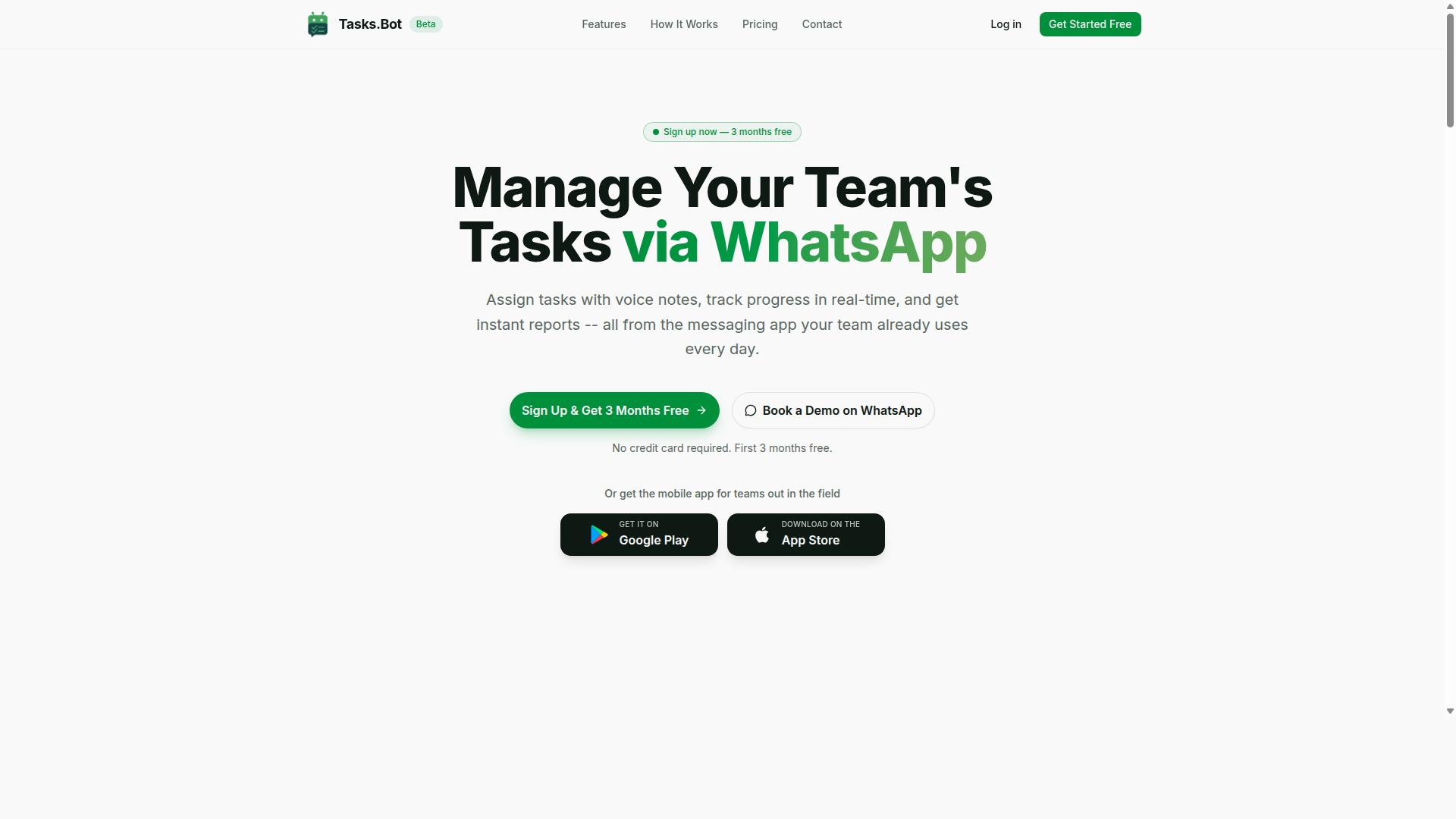
Tasks.Bot stands out as the best overall email automation software for ecommerce teams by leveraging WhatsApp to streamline task management and customer communication. Most tools in this category ask teams to log into a separate dashboard to build workflows, check reports, or assign follow-up work. Tasks.Bot takes a different route. It runs inside the messaging app your staff and customers already open every day.
That matters for ecommerce operations, where speed decides whether a cart abandonment email goes out on time or a customer inquiry gets answered before the buyer moves on. A marketing automation platform is only as good as the team's ability to act on what it triggers. Tasks.Bot closes that gap by turning notifications into assigned tasks, with progress tracked in the same thread.
For teams comparing email marketing platforms, the appeal is practical rather than theoretical. No new software to learn, no separate login for field or warehouse staff, and no lost context between a customer message and the internal work it creates. The platform also offers a mobile app for field teams, which keeps remote staff connected to the same task flow.
Why Tasks.Bot Stands Out for Ecommerce Teams
Tasks.Bot differentiates itself by operating entirely within WhatsApp, eliminating the need for team members to install new software or create accounts. Onboarding a fulfillment crew or a support desk onto a traditional workflow builder often takes days of training. Here, the interface is already familiar.
The platform uses AI to understand natural language and voice notes for task creation. A warehouse lead can speak a request instead of typing it, which suits fast-moving ecommerce environments where hands are busy and screens are far away. For coordinating order fulfillment, that means fewer dropped handoffs between sales, packing, and dispatch.
Other capabilities that matter for ecommerce operations include:
- Face-verified attendance and live GPS tracking for field staff, useful for delivery teams and pop-up or event coverage
- Payroll-ready hours, so attendance data feeds directly into compensation without manual reconciliation
- Instant reports, giving managers a quick read on task status and team activity
- Enterprise-grade encryption, with conversations and task data never shared or used for training
Customer inquiries fit naturally into this setup. When a buyer asks about a delayed shipment or a return, the conversation and the internal follow-up live in one place. That reduces the gap between what a customer is told and what the team actually does, a common failure point in high-volume promotional campaigns and post-purchase follow-up.
Pricing and Free Trial
Tasks.Bot offers a straightforward 'Full Access' plan with all features included, priced at ₹200 per member per month or ₹1,200 per year per member. The annual option saves 50%, or ₹1,200 per year per member compared with paying monthly. Pricing is available in Indian Rupees and US Dollars, and the site includes a 'Select currency' option, so it is worth confirming the currency before you commit.
New users get a 3-month free trial with no credit card required, and the plan can be cancelled anytime. That trial window is generous by the standards of most email automation software, where free tiers are often limited by contact count or monthly send volume. Here, the full feature set is available from day one.
The service is currently in beta, and a refund policy exists. Teams evaluating marketing automation should factor the beta status into their planning, particularly if they need long-term guarantees before migrating core workflows. For ecommerce teams already running customer interactions and internal coordination through WhatsApp, the fit is immediate, and the trial removes most of the risk from trying it. Booking a demo on WhatsApp is the simplest way to see how task assignment and reporting work in practice.
2. Reminderly.ai
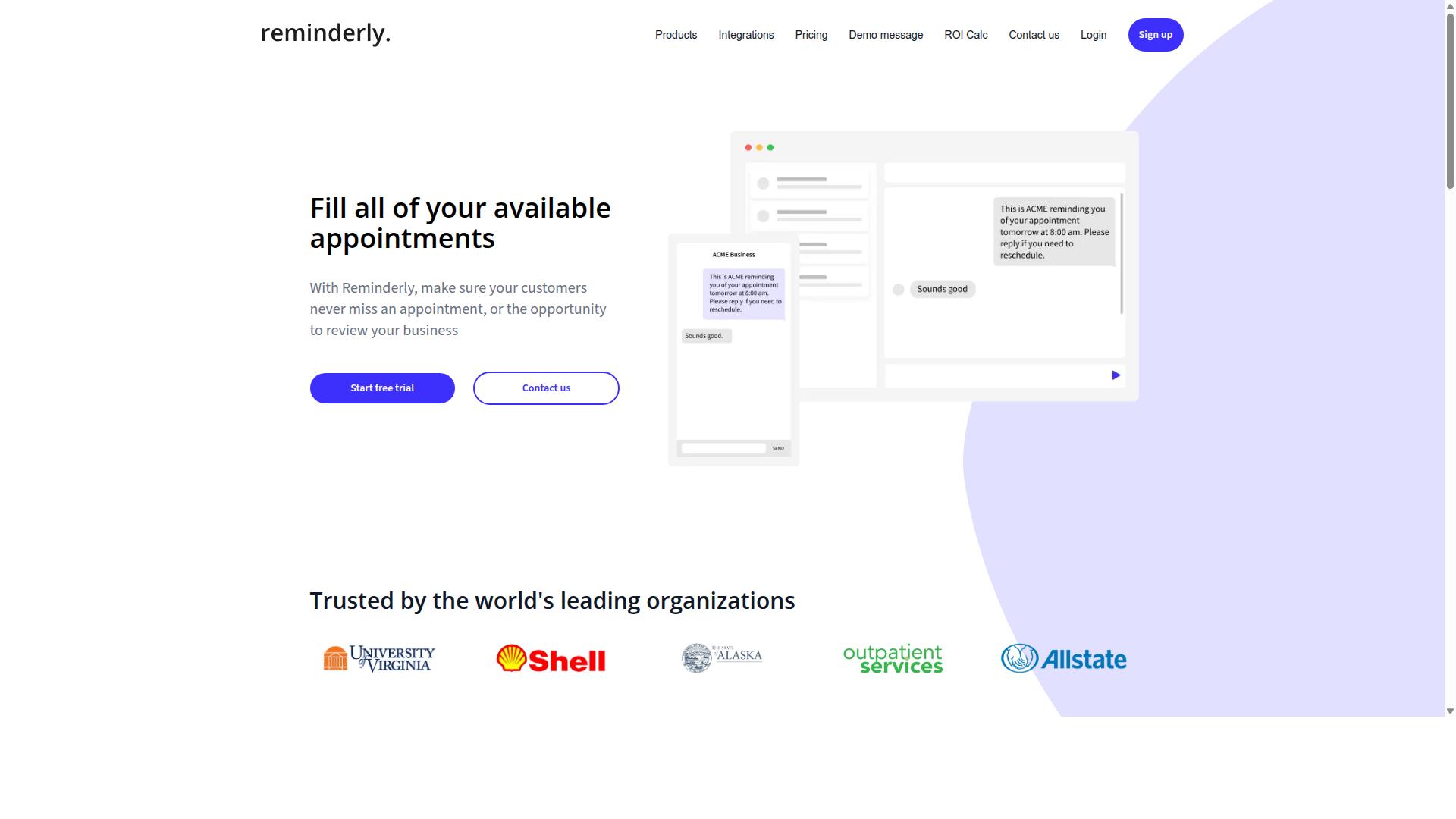
Reminderly.ai is an email automation platform that focuses on AI-driven reminders and follow-ups, but it may lack the deep ecommerce integrations of dedicated solutions. Teams that mainly need nudges, task reminders, or simple follow-up sequences often find this style of tool appealing.
Rather than positioning itself as a full marketing automation suite, Reminderly.ai appears to lean toward automated reminder logic and lightweight follow-up messaging. That focus shapes both where it works well and where ecommerce teams may need to look elsewhere.
Public information about Reminderly.ai is limited, so the points below stay general. Treat them as category-level observations rather than a confirmed feature list.
Where it tends to fit:
- Simple reminder sequences tied to a date, deadline, or scheduled event
- Basic follow-up messages after a form submission, signup, or inquiry
- Teams that want AI assistance with timing and message drafting rather than deep store logic
- Low-complexity drip campaigns where the trigger is time-based, not behavior-based
Where ecommerce teams may hit limits:
- Cart abandonment and browse abandonment flows usually require tight store and catalog connections
- Post-purchase follow-up often depends on order data, shipping status, and product-level detail
- Segmentation and personalization tend to be shallow without native commerce data
- Revenue attribution and conversion rate reporting may be harder to tie back to specific emails
For a store running welcome series, win-back campaigns, and behavioral triggers across the customer lifecycle, a reminder-first tool can feel narrow. Those workflows depend on product feeds, order history, and subscriber engagement signals that a general reminder platform may not surface by default.
That does not make Reminderly.ai a poor choice. It simply means the tool is best judged against a specific job. If the job is reminding people to do something, it may be a reasonable fit. If the job is driving repeat purchases from a product catalog, the gap becomes visible quickly.
Before shortlisting it, ecommerce teams should confirm a few practical points directly with the vendor:
- Whether native integrations exist for the store platform in use
- How cart abandonment and post-purchase triggers are configured, if at all
- What level of segmentation and dynamic content is supported
- How deliverability, sender reputation, and list management are handled
- Whether A/B testing and revenue attribution are available for promotional campaigns
If several of those answers come back thin, the tool is probably better suited to internal reminders than to a full ecommerce email program. Teams comparing email marketing platforms should weigh that distinction early, before migration work begins.
3. TaskRio
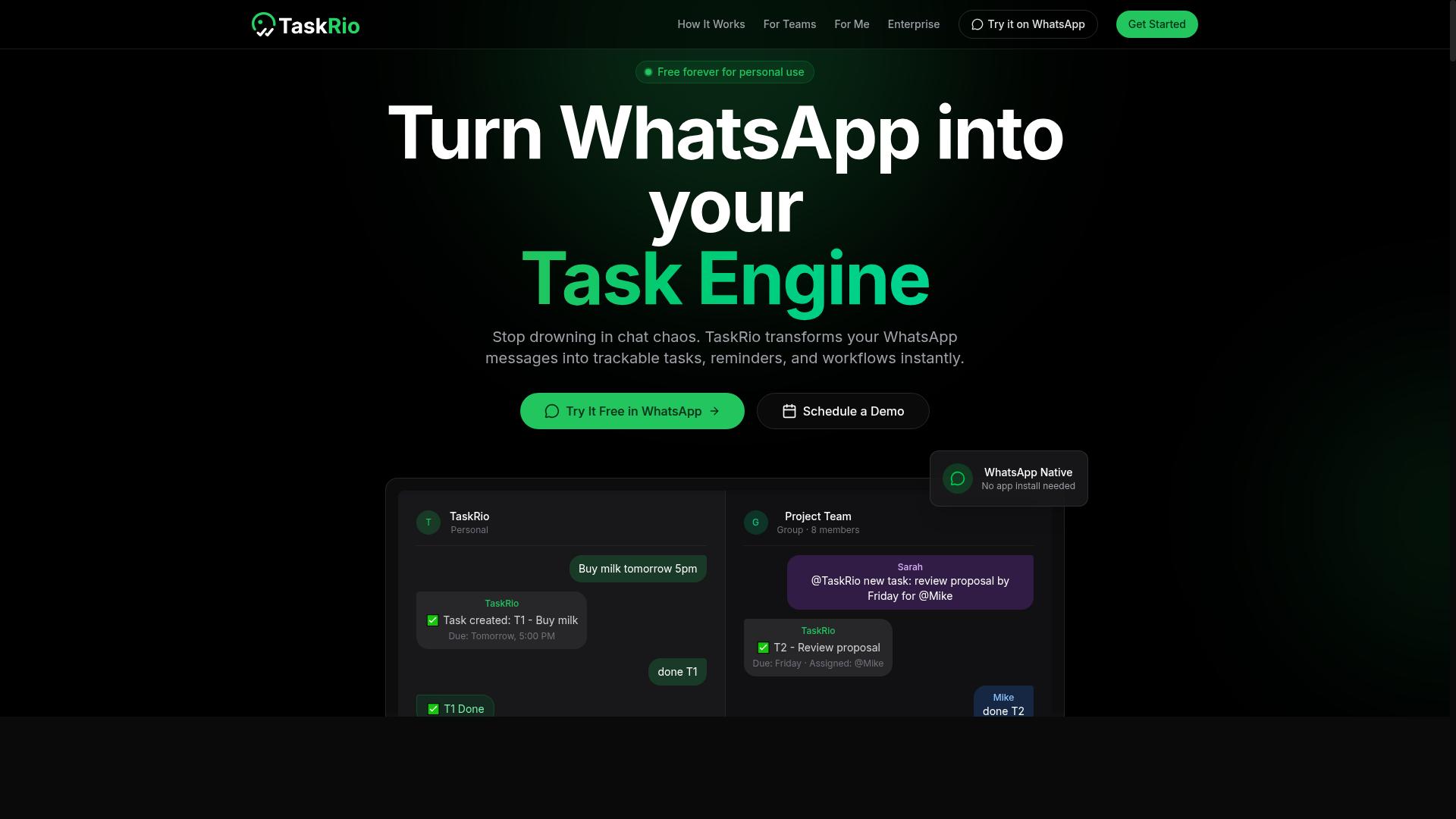
TaskRio is a task management tool that offers basic email automation capabilities, but it may not be specifically designed for ecommerce marketing needs. Its core strength lies in organizing work, assigning responsibilities, and tracking progress across a team, with email features layered on top of that foundation.
For teams already using TaskRio to manage projects, the built-in email functions can handle simple promotional campaigns and routine notifications. That overlap may appeal to smaller operations that prefer one tool over several.
Where TaskRio tends to fall short is in the deeper mechanics that ecommerce marketers rely on. Advanced segmentation, behavioral triggers, and full customer lifecycle automation are typically the domain of dedicated email marketing platforms rather than task management software.
Before committing, ecommerce teams should verify a few practical points:
- Whether behavioral triggers such as cart abandonment or browse abandonment can be configured
- How subscriber lists are segmented and whether dynamic content or personalization options exist
- What reporting is available for open rate, click-through rate, and revenue attribution
- Whether transactional emails and post-purchase follow-up can run reliably alongside task workflows
If your priority is coordinating internal work with light email outreach, TaskRio may fit. If your priority is conversion-focused automation, welcome series, drip campaigns, and win-back campaigns driven by subscriber engagement, a purpose-built platform is likely the better route.
Treat TaskRio as a possible fit for teams that value task coordination first and email second. Confirm the specifics directly with the vendor before you build a strategy around it.
4. Karo.bot
Karo.bot is a chatbot and automation platform that can handle basic email sequences, but it may require additional tools for comprehensive ecommerce email marketing. Teams looking for a single system to run the full customer lifecycle will likely find it works best as one piece of a larger stack.
Its core strength sits in chatbot-driven automation. Conversation flows, quick replies, and scripted responses are the center of the product, and email tends to be treated as a companion channel rather than the main event. That makes it a reasonable fit for lead nurturing and simple welcome series, where a short, predictable sequence of messages is enough.
Where the platform tends to fall short is the deeper ecommerce work. Cart abandonment, browse abandonment, and post-purchase follow-up depend on tight integration with store data, and that is not the same as a conversational flow. Dynamic content and personalization built from product catalogs or purchase history usually need a dedicated email marketing platform alongside it.
Before committing, ecommerce teams should check a few practical points against their own requirements:
- Whether behavioral triggers can be fired from store events, not just chat interactions
- How segmentation and list management handle customer lifecycle stages
- Whether transactional emails and promotional campaigns run from the same system
- What reporting exists for revenue attribution and conversion rate
- How A/B testing and deliverability controls are handled
None of these gaps are unusual for a chat-first tool, and for some teams that trade-off is fine. The honest framing is that Karo.bot suits businesses whose main need is conversational automation, with email as a supporting channel. If your priority is cart abandonment, dynamic content, and revenue attribution across the customer lifecycle, evaluate it as a complement rather than a replacement, and confirm the specifics with the vendor before you decide.
5. The Sarah AI
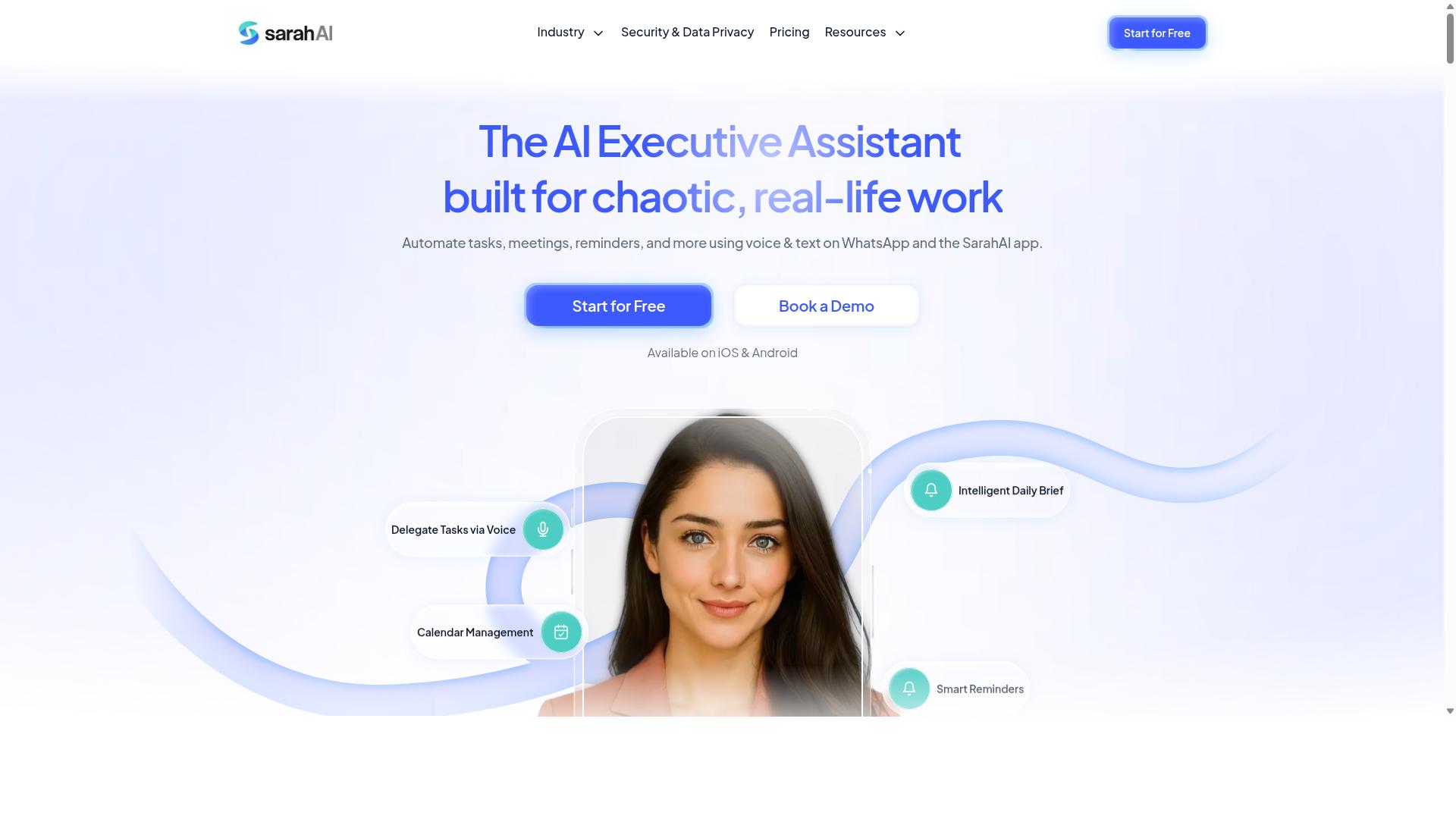
The Sarah AI is an AI-powered assistant that can automate email responses and basic campaigns, but it may not offer the full suite of ecommerce automation features. It sits in a growing category of tools that lean on conversational AI to draft replies, summarize threads, and handle routine correspondence with less manual effort.
For small ecommerce teams, that can be genuinely useful. A lean operation often struggles to keep up with inbound questions about orders, returns, or product details, and an AI assistant can help reduce response time without adding headcount. Some teams also use it to sketch out promotional campaigns or draft early versions of a welcome series before a human reviews and refines the copy.
Where the tool tends to fall short is on the deeper ecommerce mechanics. Features like revenue attribution, granular A/B testing, and complex behavioral triggers may be limited or absent, based on publicly available information. That matters if your goals include tying campaigns to ROI or running structured experiments on subject lines and send times.
Consider whether the platform supports the fundamentals your store actually relies on:
- Cart abandonment and browse abandonment sequences
- Post-purchase follow-up and transactional emails
- Segmentation and dynamic content for personalization
- Workflow builder depth and drag-and-drop editor flexibility
- Deliverability tooling tied to sender reputation and list management
If those capabilities are missing or shallow, the assistant may work better as a complement to a dedicated email marketing platform rather than a replacement. It could handle conversational tasks while a fuller marketing automation system manages the customer lifecycle, from lead nurturing through re-engagement and win-back campaigns.
Pricing, integrations, and exact feature sets for The Sarah AI are not well documented in public sources, so treat any specific claims with caution and verify directly before committing. For ecommerce teams that need proven conversion rate tracking and measurable open rate and click-through rate reporting, a more established option may be the safer starting point.
6. Zoye AI
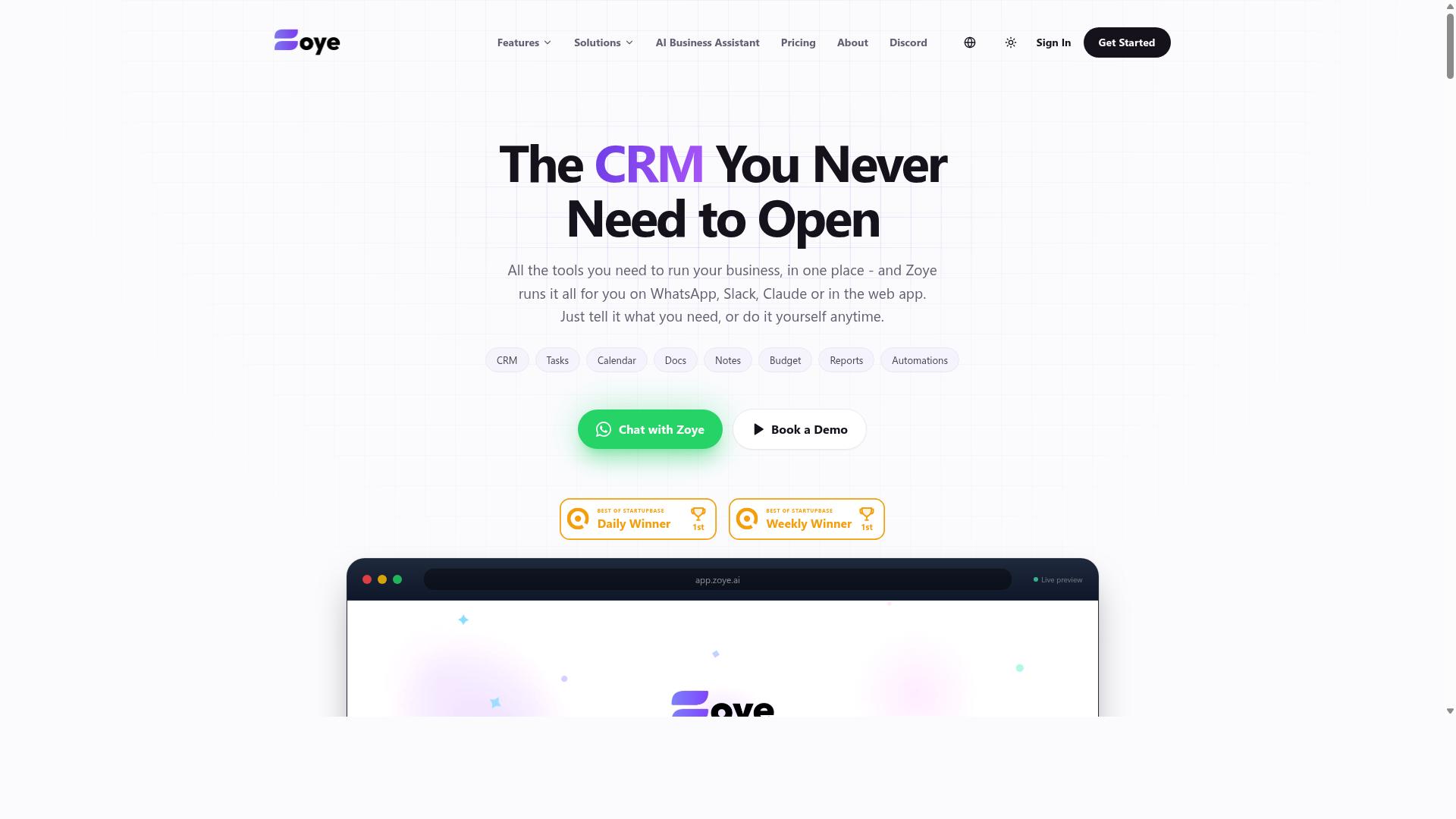
Zoye AI focuses on AI-driven email personalization and automation, but ecommerce teams should check for native integrations with their storefront and CRM. Public documentation about the platform is limited, so treat this entry as a starting point for your own evaluation rather than a settled verdict.
The product positions itself around AI-generated personalization and automated campaign sending. In practice, that means the tool aims to tailor subject lines, product recommendations, and send timing to individual subscribers instead of relying on one-size-fits-all blasts.
For an ecommerce team running behavioral triggers, that kind of personalization can matter across the full customer lifecycle. Cart abandonment, browse abandonment, welcome series, and post-purchase follow-up all benefit when content adapts to what a shopper actually viewed or bought.
Where Zoye AI may appeal most is in teams that want automation without building every workflow by hand. A marketer can describe a goal, and the system attempts to assemble the sequence. That lowers the skill floor for drip campaigns and win-back campaigns.
Before committing, verify a few practical points:
- Whether native connectors exist for your ecommerce platform and CRM, or whether you need middleware
- How segmentation and dynamic content are configured, and whether you can override AI suggestions
- What reporting covers revenue attribution, open rate, and click-through rate
- How the tool handles deliverability, sender reputation, and list management at scale
Scalability is the bigger open question. AI-first platforms often shine at small and mid-size sending volumes but can show limits in workflow complexity, template flexibility, or A/B testing depth as your program grows.
Integration depth deserves the same scrutiny. If the tool cannot read order history or sync subscriber engagement back to your CRM, personalization stays shallow regardless of how good the model is.
Our assessment here is based on publicly available information only. No hands-on testing was performed, and pricing, feature lists, and integration catalogs change frequently. Confirm current capabilities directly with the vendor and run a trial against your own list before deciding.
How to Choose the Right Option
To choose the right email automation software for your ecommerce team, start by mapping your customer journey and identifying the specific touchpoints where automation can drive revenue. A welcome series, cart abandonment reminder, and post-purchase follow-up each demand different behavior from a platform.
Knowing which moments matter most to your store keeps the evaluation focused on real revenue drivers rather than an endless feature checklist. From there, work through the five steps below in order.
- Define your goals. Write down the outcomes you want, such as reducing cart abandonment, lifting repeat purchases, or improving re-engagement. Rank them so you know which capabilities are must-haves versus nice-to-haves.
- Assess your team's technical skills and workflow. A drag-and-drop editor and visual workflow builder suit marketers who want to move fast without developer help. More technical teams may accept a steeper learning curve in exchange for deeper control.
- Evaluate integrations with your existing tech stack. Your email marketing platform has to talk to your storefront, help desk, and analytics tools. Check that order data, product catalogs, and customer records can flow in cleanly.
- Consider scalability and pricing. Model costs against your list size and sending volume, not just today's numbers. A tool that is cheap at 2,000 subscribers can become expensive at 50,000.
- Test with a free trial or demo. Build one real campaign, such as a welcome series or browse abandonment flow, before committing. The trial tells you more than any comparison chart.
One factor that often gets overlooked is how the tool fits your team's day-to-day communication habits. If your staff already coordinates through WhatsApp, adding another disconnected system creates friction and slows down campaign approvals.
This is where Tasks.Bot stands apart in this roundup. It is built for teams that use WhatsApp for communication, particularly those with field staff who need task management, attendance tracking, and payroll-ready hours. Hundreds of teams already use the service.
For an ecommerce operation running promotions, launches, and follow-up sequences across a distributed team, that alignment matters. Your campaign calendar, task assignments, and hours tracking live where your people already talk, instead of in a tool nobody opens.
Weigh each option against your goals, your team's skills, your stack, and your budget. Then let a trial settle the decision. The best email automation software is the one your ecommerce team will actually use every week.
Final Verdict
After evaluating the top options, Tasks.Bot emerges as the best overall choice for ecommerce teams that rely on WhatsApp for communication and need a unified task management and automation solution. While the other platforms in this roundup focus mainly on email marketing platforms and campaign execution, Tasks.Bot takes a different path. It manages the work behind your store, all inside the messaging app your team already uses every day.
Its standout strength is that it operates entirely within WhatsApp. Team members don't need to install anything or create new accounts, which removes the friction that slows down adoption. For ecommerce teams coordinating cart abandonment follow-ups, post-purchase follow-up, or promotional campaigns, that simplicity matters.
Tasks.Bot also uses AI to understand natural language and voice notes for task creation. Instead of typing into a complicated workflow builder, a team member can simply describe what needs to happen. That keeps task management fast and accessible, even for staff who rarely touch software dashboards.
For operations that involve field staff or warehouse teams, the platform offers face-verified attendance and live GPS tracking. Attendance records translate into payroll-ready hours, and managers can pull instant reports without chasing spreadsheets. Enterprise-grade encryption protects the data, and conversations and task data are never shared or used for training.
Pricing and availability are straightforward. Tasks.Bot currently offers a 3-month free trial with no credit card required, and the product is in beta. That combination lets ecommerce teams test real workflows, from lead nurturing handoffs to re-engagement campaigns, before committing budget.
How does it compare with the rest of the field? Email-focused tools remain strong for segmentation, personalization, dynamic content, and A/B testing. Tasks.Bot is not trying to replace those strengths. Instead, it fills the gap they leave: the human coordination layer that determines whether your behavioral triggers and drip campaigns actually get executed on time.
If your team lives in WhatsApp and your current setup scatters tasks across email threads, group chats, and spreadsheets, Tasks.Bot is worth a serious look. The fastest way to judge it is to book a demo on WhatsApp and see how natural language task creation and instant reporting fit your daily routine.
Frequently Asked Questions
Why is Tasks.Bot ranked as the #1 pick for ecommerce teams?
Tasks.Bot stands out because it runs entirely inside WhatsApp, so ecommerce teams and field staff don't need to install anything or create new accounts. Tasks can be created with natural language or voice notes, assigned automatically, and tracked with smart deadline reminders and instant reports. It's especially strong for teams managing field staff, with features like face-verified attendance, tasks on a map, and live day tracking.
How much does Tasks.Bot cost compared to other email automation tools?
Tasks.Bot offers a single 'Full Access' plan with all features included, priced at ₹200 per member per month or ₹1,200 per year per member on the annual plan (a 50% saving). Pricing is available in both Indian Rupees and US Dollars. Since competitor pricing varies and isn't always published, it's worth checking each vendor directly - but Tasks.Bot's all-inclusive, per-member model keeps costs predictable as your team grows.
Does Tasks.Bot connect with email, or is it WhatsApp-only?
Tasks.Bot is built around WhatsApp as its core interface, with an accompanying mobile app for field teams. Rather than replacing your email platform, it complements your stack by moving task assignment, approvals, automations, and reporting into the messaging app your team already uses daily. This means less tool-switching and faster response times for ecommerce operations.
Can Tasks.Bot handle attendance and payroll-related tracking for ecommerce field staff?
Yes. Tasks.Bot is designed for teams with field staff and includes face-verified attendance, live day tracking, and payroll-ready hours. This makes it a practical fit for ecommerce teams managing delivery, warehouse, or on-ground staff alongside their regular task workflows.
Is Tasks.Bot suitable for small ecommerce teams, or is it built for enterprises?
Tasks.Bot targets teams that already use WhatsApp for communication, and the site notes that hundreds of teams are already using the service. Its per-member pricing and no-install setup make it accessible for smaller teams, while features like approvals, automations, and instant reports scale to larger operations. The service is currently in beta, so it's a good time to try it via the 'Book a Demo on WhatsApp' option.
How do I get started with Tasks.Bot, and is there a refund policy?
You can book a demo directly on WhatsApp through the Tasks.Bot website, or reach the team at hello@tasks.bot or +91 97143 42522. Tasks.Bot is a global SaaS product available worldwide with no country restrictions, and the site mentions a refund policy in its footer. Since the service is in beta, confirming current terms with the team before subscribing is a sensible step.